


Brazil is a country made for great journeys. Its enormous distances, mountain ranges, tropical forests and historic cities once gave rise to an extensive railway network that played a central role in the country's development.
Today, however, traveling through Brazil by train is very different from traveling through Europe. There is no nationwide passenger network on which a visitor can simply travel from one major city to the next. Most intercity passenger services disappeared decades ago, while many former railway lines now carry freight or have fallen out of use.
Yet Brazil's railway story is far from over.
A handful of remarkable passenger trains remain, alongside beautifully preserved steam railways, historic stations and entire communities whose history is inseparable from the railway.
Rather than attempting to list every tourist train operating somewhere in this enormous country, I want to concentrate on the railways I know particularly well: the trains and railway places that form part of our Grand Rail Tour of Brazil.
Together, they reveal several very different chapters of Brazilian railway history.
Perhaps the most unusual railway experience of our journey is also the least like a tourist train.
The Estrada de Ferro Vitória a Minas, usually known simply as the Vitória–Minas Railway, remains a genuine long-distance passenger service. Every morning a passenger train leaves Greater Vitória on Brazil's Atlantic coast for Belo Horizonte, while another travels in the opposite direction.
The journey takes approximately thirteen and a half hours. Vale's current timetable has trains departing at 7:00 in the morning and arriving at around 20:30. The train includes economy and executive accommodation as well as restaurant and snack facilities.
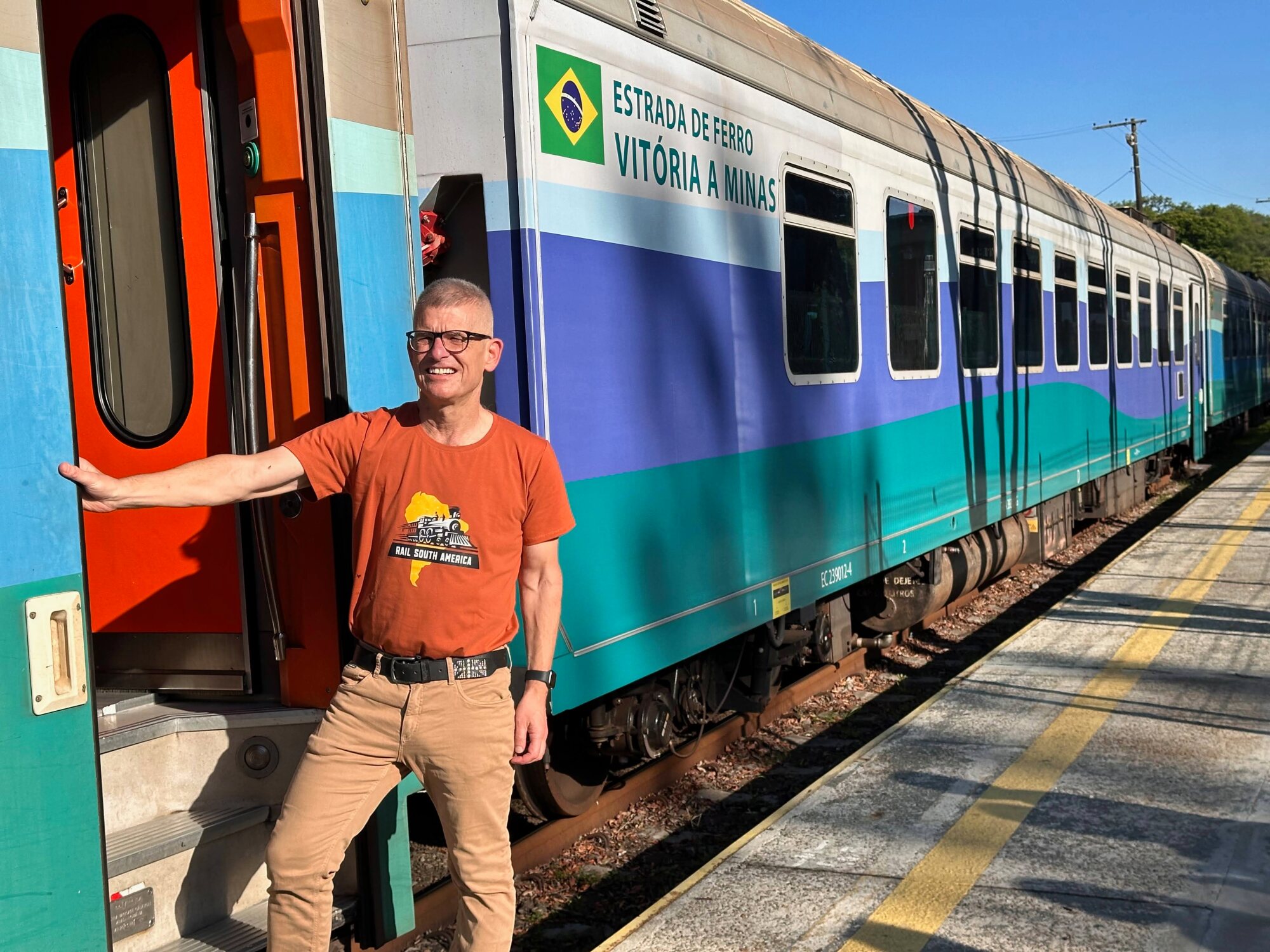
This is one of the reasons I find the journey so fascinating.
We are not boarding a railway created primarily for tourists. We travel alongside ordinary Brazilian passengers using the train to reach towns and communities along the route.
Leaving the tropical coastal region of Espírito Santo, the railway gradually penetrates the interior before continuing through the landscapes of Minas Gerais toward Belo Horizonte.
It is a long day — and that is precisely the point.
A flight would cover the distance quickly. The train allows us to watch Brazil change outside the window hour after hour. Small communities, rivers, mining landscapes and green hills replace one another as we travel deeper into the country's interior.
For anyone interested in understanding what long-distance rail travel in Brazil is actually like today, this is one of the most authentic railway experiences available.
From Belo Horizonte, our journey continues into one of Brazil's most historically important regions: Minas Gerais.
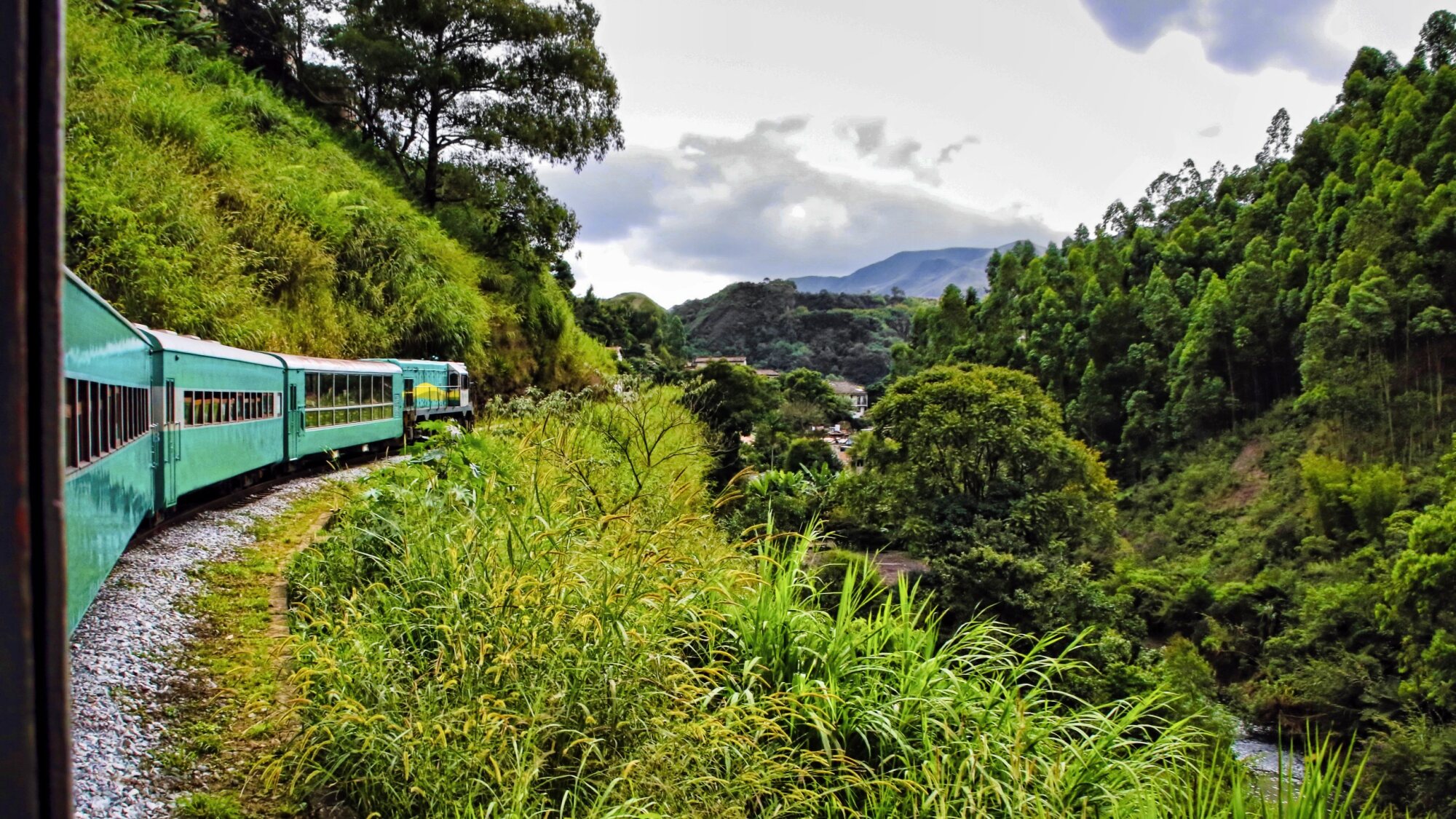
Ouro Preto and nearby Mariana are famous above all for their colonial architecture, Baroque churches and the extraordinary wealth created by gold mining. But the railway also became an important part of the region's history.
For many years, visitors could travel on the Trem da Vale between Ouro Preto and Mariana, following an 18-kilometer railway through the mountainous landscape separating the two historic cities.
The tourist service was suspended in 2020 during the Covid pandemic and has not yet returned to regular operation.
There is, however, encouraging news.
In February 2026, restoration work began again on the railway, its infrastructure and historic equipment. The municipalities of Ouro Preto and Mariana are working with Vale and other partners with the intention of preparing the line for the eventual return of tourist trains.
I nevertheless think the railway belongs in this story. Its stations and tracks are reminders of the important role railways played in connecting the mining communities of Minas Gerais — and there is now genuine reason to hope that trains may eventually run between these two remarkable cities again.
Not far away, another historic railway is very much alive.
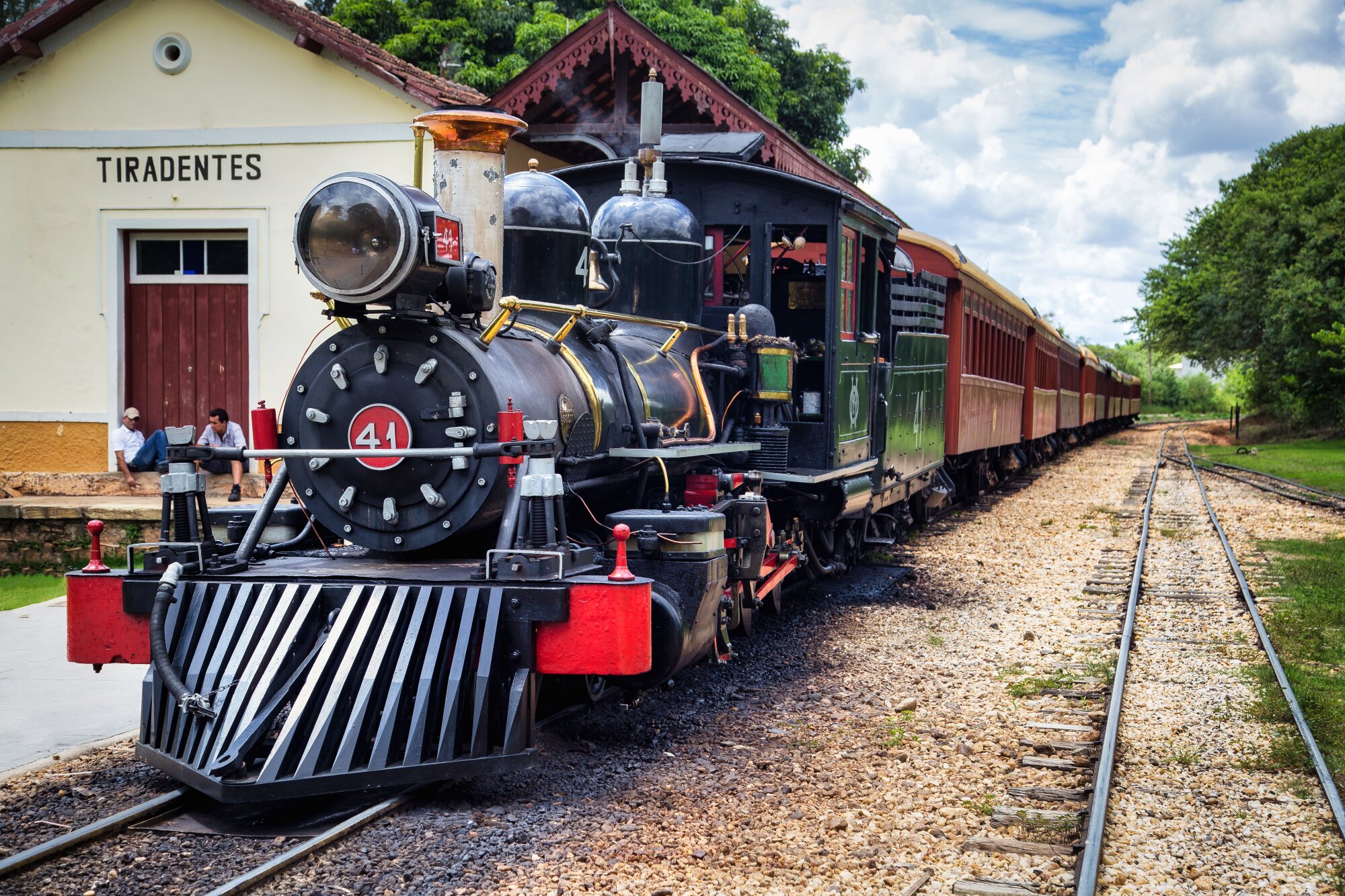
The Maria Fumaça between São João del-Rei and Tiradentes is one of the great railway experiences of Minas Gerais.
The railway covers approximately 12 kilometers between two of Brazil's most beautiful historic towns. A steam locomotive hauls traditional passenger carriages through the countryside, recreating an atmosphere from a very different age of travel.
But this is more than a picturesque tourist attraction.
São João del-Rei has a deep railway tradition, and its railway complex, workshops, locomotives and museum form an important part of Brazil's preserved railway heritage. The railway continues to connect São João del-Rei with Tiradentes and was operating special services as recently as the September 2026 Independence Day holiday. Its administration is currently going through a transition intended to preserve the railway and its historic assets for the future.
On our journey, the steam train provides a wonderful contrast with the modern long-distance Vitória–Minas passenger train.
One railway still performs a practical transport function over hundreds of kilometers. The other preserves the sights, sounds and machinery of Brazilian rail travel from another century.
The smell of coal, the whistle of the locomotive and the slow journey through the Minas Gerais countryside are difficult to reproduce in a modern railway experience.
If the Vitória–Minas Railway demonstrates the enormous scale of Brazil, the Serra Verde Express demonstrates its dramatic geography.
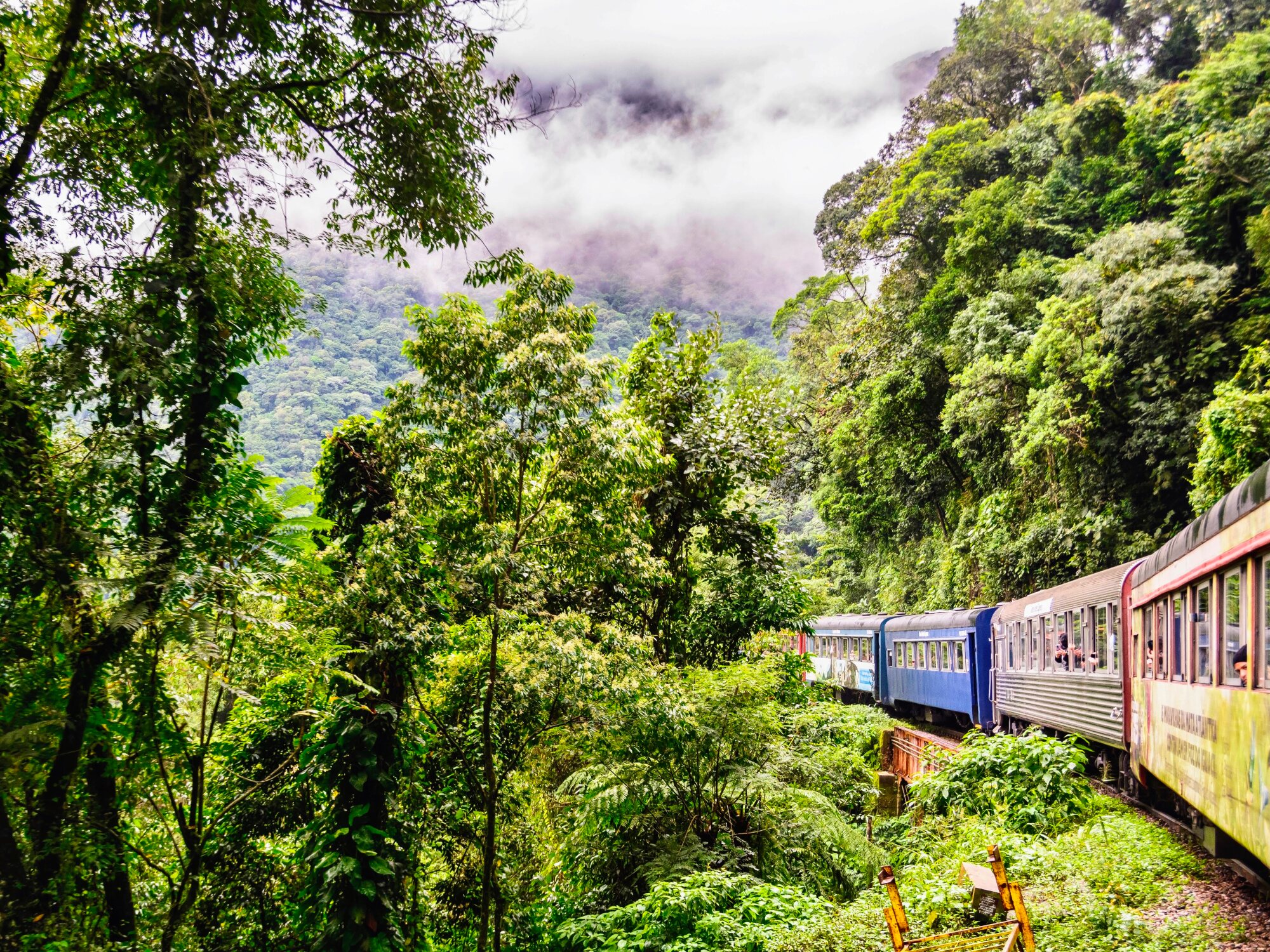
The train leaves Curitiba, high on the plateau of Paraná, before descending through the Serra do Mar toward Morretes.
This railway is an engineering achievement as much as a scenic journey.
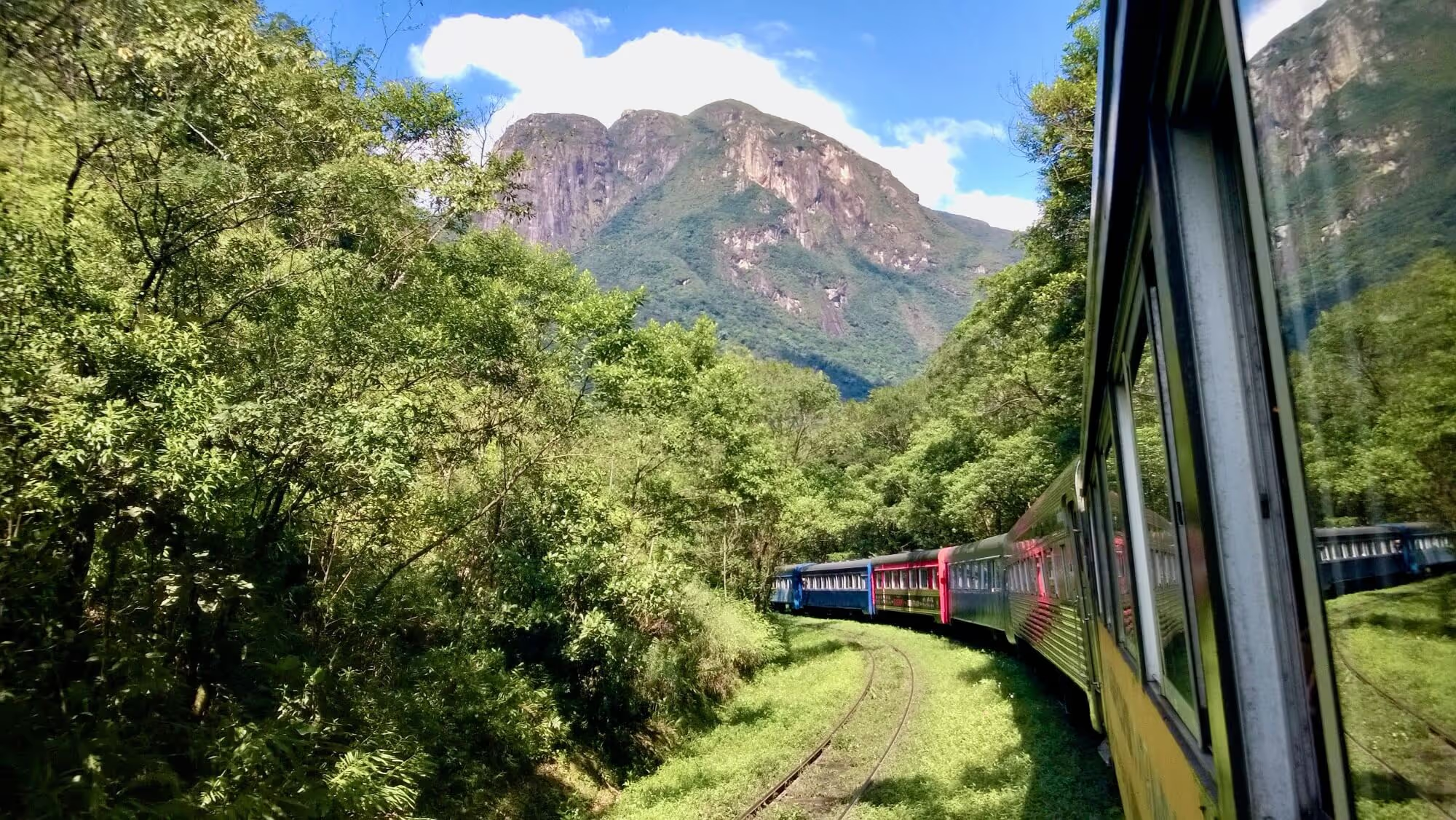
The line passes through tunnels, crosses bridges and viaducts and clings to steep mountainsides as it makes its way through dense Atlantic Forest. In places the vegetation seems almost to engulf the railway.
The Serra Verde Express remains in regular tourist operation, with the operator publishing a full calendar of departures for 2026.
For me, however, what makes the journey particularly memorable is not simply one spectacular viewpoint.
It is the gradual transition.
Curitiba's urban landscape gives way to forest and mountains. The railway twists and descends through increasingly wild terrain until we eventually reach the warmer lowlands around Morretes.
The Atlantic Forest once covered an enormous area along Brazil's eastern coast. Much of it has disappeared, making the surviving forest of the Serra do Mar particularly precious.
Experiencing that landscape from an old railway provides an entirely different perspective from seeing it from a highway.
It is no surprise that our existing article about the Serra Verde Express has become one of the most frequently appearing Rail South America pages in Google search.
Brazil's railways were closely connected with another product that transformed the country's history: coffee.
During the nineteenth and early twentieth centuries, the rapid expansion of coffee cultivation in São Paulo created enormous demand for transportation. Railways carried coffee from the interior toward the ports and helped towns and cities develop along their routes.
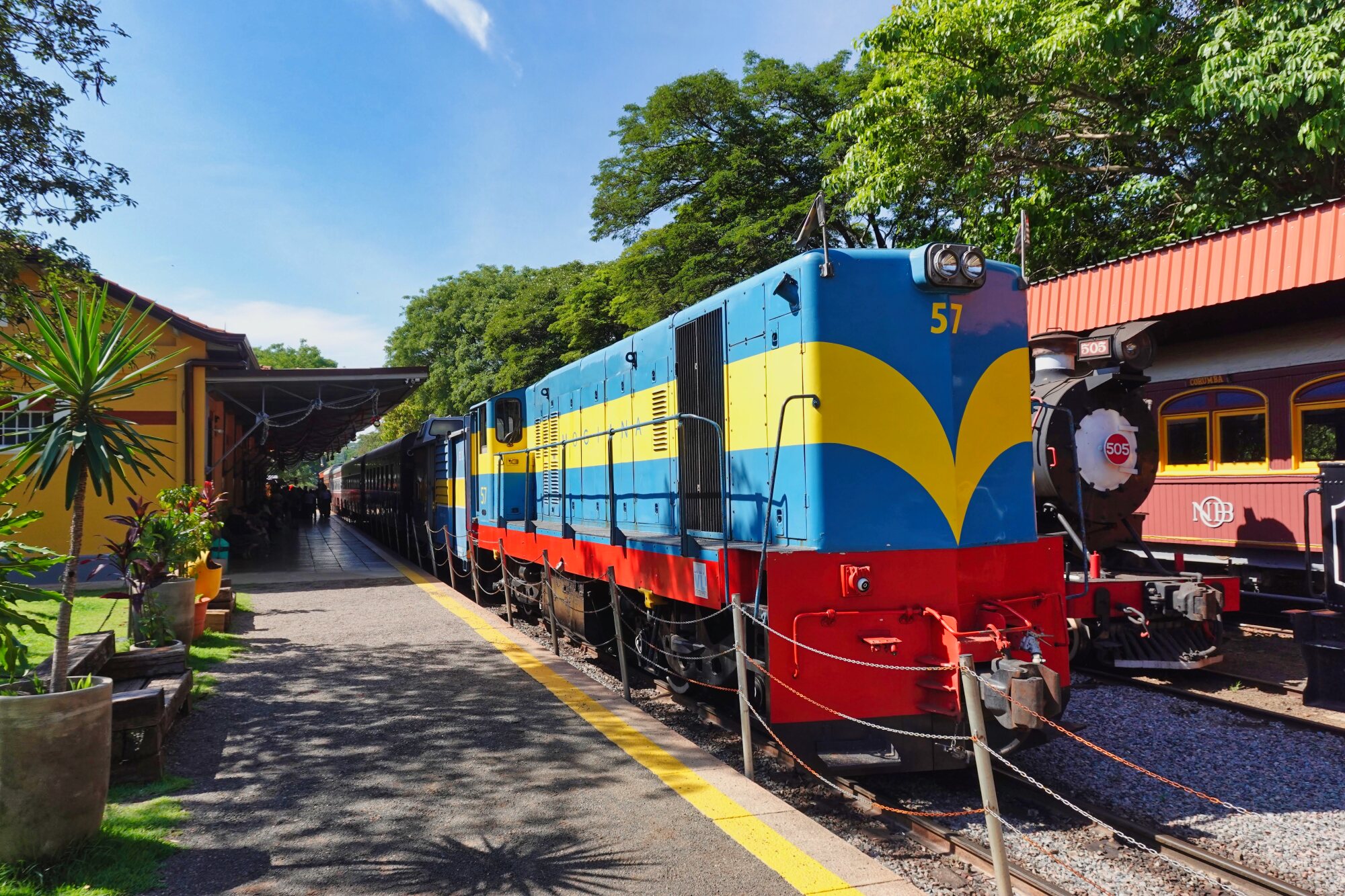
Today, a small part of that railway era can still be experienced aboard the Viação Férrea Campinas–Jaguariúna.
Operated by the Brazilian Association for Railway Preservation, the ABPF, the preserved railway begins at Anhumas station in Campinas and follows approximately 24 kilometers of the former Companhia Mogiana railway toward Jaguariúna.
Historic locomotives and carriages take passengers through countryside once closely associated with São Paulo's coffee economy.
The preserved railway has operated regularly since 1984, and services continue in 2026.
This is another reason I prefer to include railway experiences of very different types in our Brazil tour.
A rail journey does not always need dramatic mountains or enormous distances to be interesting.
Sometimes the importance of a railway lies in understanding why it was built, what it transported and how it changed the region through which it passed.
The Campinas–Jaguariúna railway tells exactly that story.
Our final major railway encounter is not principally a train journey at all.
It is a place.
High in the Serra do Mar between São Paulo and the port of Santos lies Paranapiacaba, one of the most fascinating railway settlements in South America.
The village developed around the railway built to connect the rapidly growing city of São Paulo and the coffee-producing interior with the port of Santos far below.
The greatest obstacle was geography.
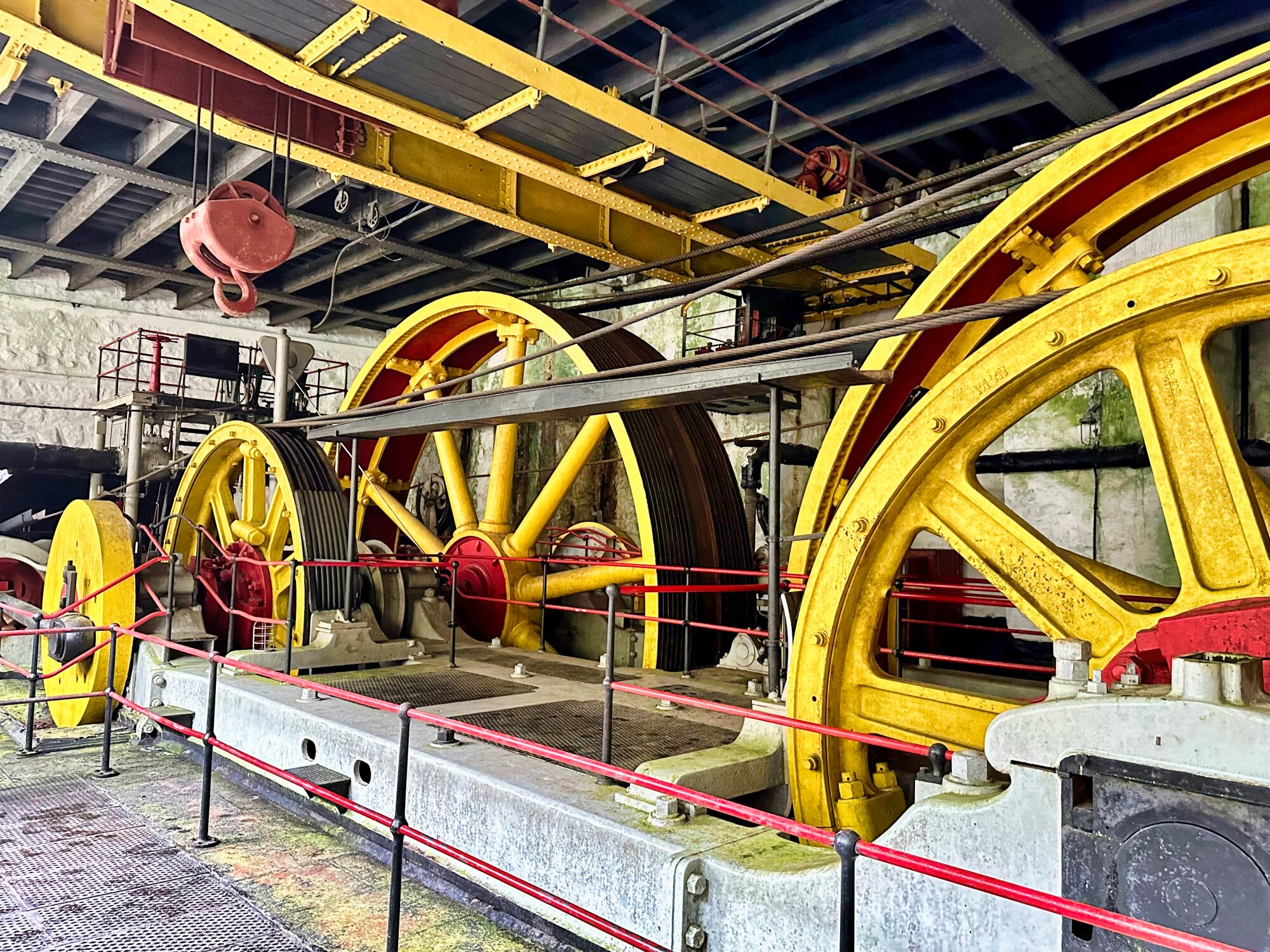
The Serra do Mar rises dramatically from Brazil's coastal plain, creating an enormous engineering challenge for nineteenth-century railway builders. A system of inclined railway sections and stationary engines was constructed to move trains up and down the escarpment.
British engineers and railway workers played an important role in the development of the railway, leaving Paranapiacaba with architecture that can look surprisingly English amid the mist and tropical vegetation of southeastern Brazil.
Although the original funicular systems belong to railway history, Paranapiacaba remains closely connected to the rails. São Paulo's CPTM continues to operate scheduled Expresso Turístico excursions from Luz station to Paranapiacaba in 2026.
On our Grand Rail Tour, we visit Paranapiacaba to explore the village and understand the remarkable engineering story behind the railway connecting São Paulo with the coast.
For anyone fascinated by industrial archaeology and railway history, it is one of Brazil's most intriguing places.
These surviving railways make more sense when placed in their historical context.
Brazil once possessed a much larger passenger railway network. Railways were essential to the development of mining districts, coffee regions, ports and growing industrial cities.
Over the course of the twentieth century, however, road and air transport became dominant. Many passenger services disappeared, some railway lines were abandoned and others increasingly concentrated on freight.
Today, conventional long-distance passenger trains are rare. Brazil's Ministry of Transport currently lists only the Vitória–Minas and Carajás railways as regular passenger rail services, although numerous tourist and historic railways continue to operate throughout the country.
This means that Brazil cannot realistically be toured exclusively by train.
And I don't think it needs to be.
The most rewarding approach is to combine the surviving railways with the cities, landscapes and historic regions they helped create.
That is exactly how we designed our journey.
Our Grand Rail Tour of Brazil is therefore not an attempt to travel every kilometer by rail.
We use trains where they create a genuinely interesting travel experience.
The journey begins in Salvador da Bahia before continuing to Vitória and the long-distance train into Minas Gerais. From there we discover Belo Horizonte, Ouro Preto, São João del-Rei and Tiradentes before continuing to Rio de Janeiro.
Farther south, we travel to Curitiba for the Serra Verde Express, experience the historic Campinas–Jaguariúna railway and explore the extraordinary railway heritage of Paranapiacaba before finishing in São Paulo.
Together, these experiences reveal something that is easy to miss when visiting only Brazil's famous beaches.
Brazil has a remarkable railway history — and parts of it are still very much alive.
For me, that is what makes train travel in Brazil so interesting. It is not one continuous railway journey. It is a collection of surviving routes, historic locomotives, ambitious engineering works and railway towns, each revealing another chapter in the story of this enormous country.


.svg)
