


There are landscapes that impress you at first sight, and others that reveal themselves slowly. Lake Titicaca does both.
At approximately 3,810 metres (12,500 feet) above sea level, the vast blue lake rests between Peru and Bolivia, surrounded by the austere beauty of the Andean altiplano. The air is thin, the sunlight unusually clear and the horizon immense. Snow-covered mountains rise in the distance, reed boats drift near the shore, and island communities preserve customs that reach back long before the arrival of the Spanish.
This Lake Titicaca travel guide follows the most rewarding route through the region—from La Paz and Copacabana to Isla del Sol and Puno, before continuing to Cusco aboard the PeruRail Titicaca train.
Lake Titicaca is often described as the world’s highest navigable lake and is the largest freshwater lake in South America. Yet statistics alone cannot explain its fascination. This is a place where geography, mythology and everyday life are inseparable—a lake that has served as a sacred centre, a trade route and a meeting point between peoples for centuries.
For travellers, Lake Titicaca is not simply a destination to photograph. It is a place to slow down, listen and look more carefully.
Across the Andes, mountains, rivers and lakes are more than features of the landscape. They are part of a living spiritual world. Lake Titicaca occupies a particularly important place in Andean belief.
One ancient tradition tells that the creator god Viracocha emerged from the waters and brought forth the sun, moon and stars. In the Inca story of origin, Manco Cápac and Mama Ocllo rose from Lake Titicaca and set out to establish a new civilisation, eventually founding Cusco.
Other local legends speak of a prosperous people who disobeyed the mountain gods, the Apus. Pumas were sent to punish them, and the Sun God wept until his tears flooded the valley. When daylight returned, the pumas had become stone. The name Titicaca is therefore sometimes interpreted as “rock of the puma”, although the lake’s name and etymology have several possible Indigenous interpretations.
Whether understood as history, faith or oral tradition, these stories express something still felt around the lake today: this is sacred ground.
Peru and Bolivia share Lake Titicaca, but each side offers a different experience.
The Peruvian shore is centred on Puno, a lively highland city and the principal gateway to the Uros floating islands and Taquile Island. The Bolivian side feels quieter and more elemental, with Copacabana, the Strait of Tiquina and Isla del Sol set against magnificent views of the Cordillera Real.
There is no need to choose one side over the other. Together, they reveal the lake’s full character: ceremonial and practical, tranquil and animated, ancient and very much alive.
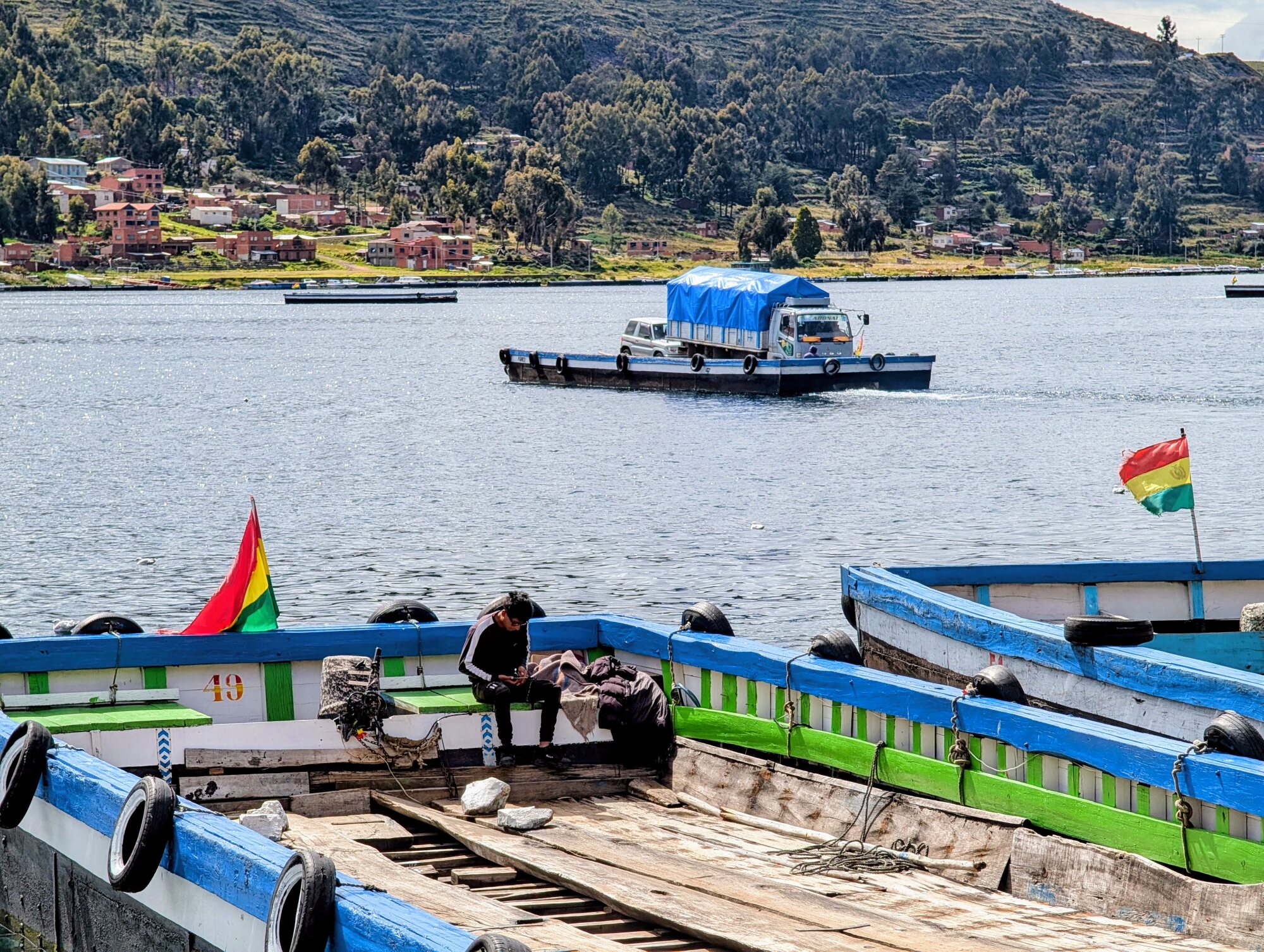
The journey from La Paz to Copacabana is a memorable introduction to Lake Titicaca. Leaving the extraordinary bowl of La Paz and El Alto behind, the road crosses the open altiplano, where cultivated fields, small settlements and distant peaks stretch beneath an enormous sky.
At the Strait of Tiquina, the journey takes an unexpected turn. Passengers cross the narrow channel by motor launch while buses and other vehicles are carried separately aboard simple wooden ferries. It is a wonderfully practical piece of Andean travel and one of those modest experiences that stays in the memory long after grander sights have faded.
Beyond Tiquina, the first broad views of Lake Titicaca appear. Depending on the light, its water changes from silver to cobalt blue. By the time Copacabana comes into sight, the scale of the lake is unmistakable.
Copacabana is Bolivia’s best-known town on Lake Titicaca. Its whitewashed basilica, busy waterfront and pilgrimage traditions make it far more than a departure point for island excursions. It is a place where Catholic observance and older Andean beliefs have long existed side by side.
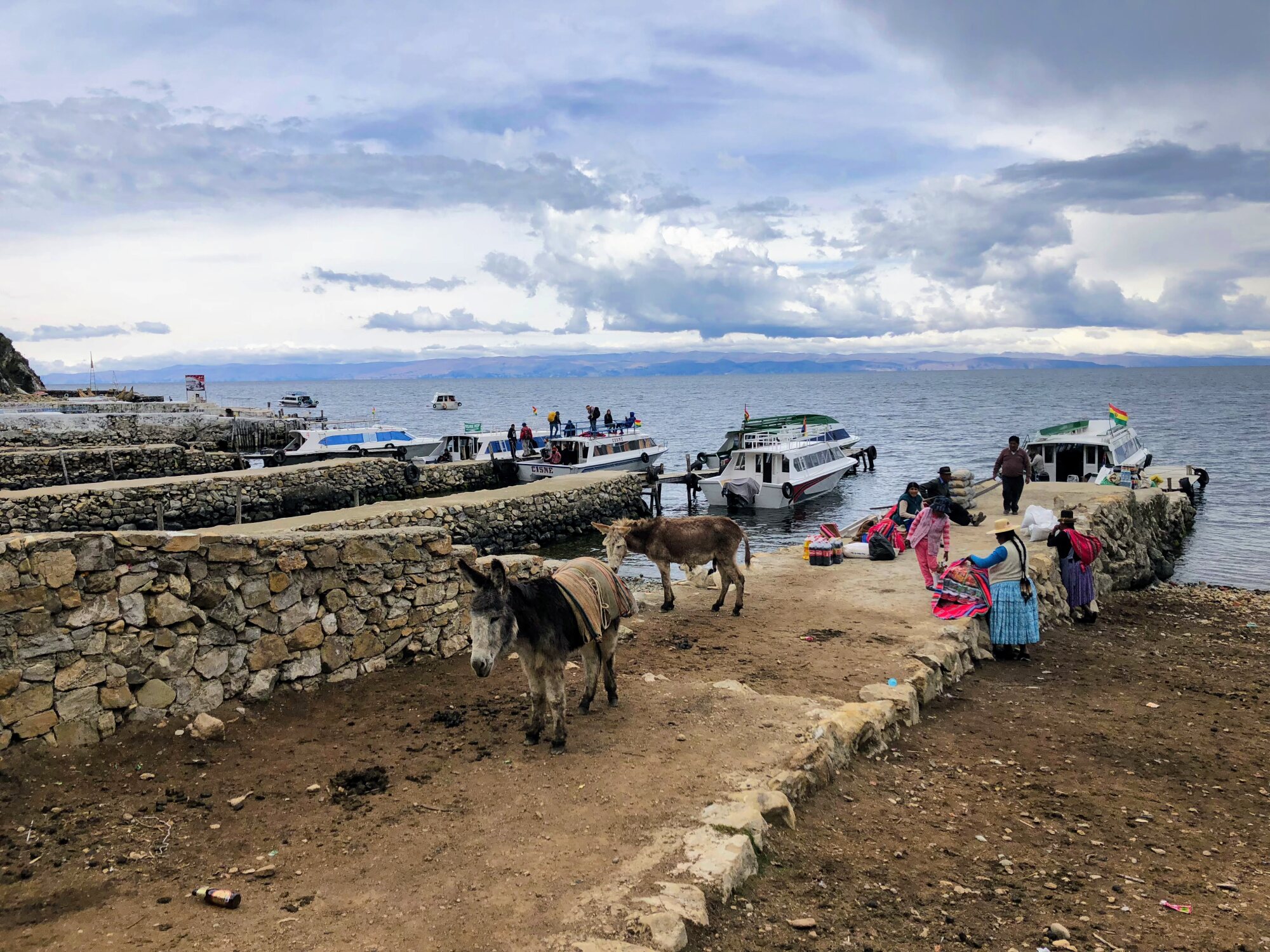
From the harbour, boats cross to Isla del Sol, or Sun Island. According to Inca mythology, this is where the sun was born. The island has no motor traffic; its paths pass terraced hillsides, small communities and archaeological sites above intensely blue water.
On the southern part of the island, the remains of Pilkokaina—often called the Temple or Palace of the Sun—recall the island’s ceremonial importance. Near Yumani, the Inca Stairway climbs from the shore toward a sacred fountain. The climb requires patience at this altitude, but the reward is a view of the lake that seems to extend without end.
Isla del Sol is beautiful, but its deeper appeal lies in its continuity. Families still farm terraces shaped by generations of labour, boats continue to connect isolated communities, and the ancient landscape remains part of daily life rather than a museum exhibit.
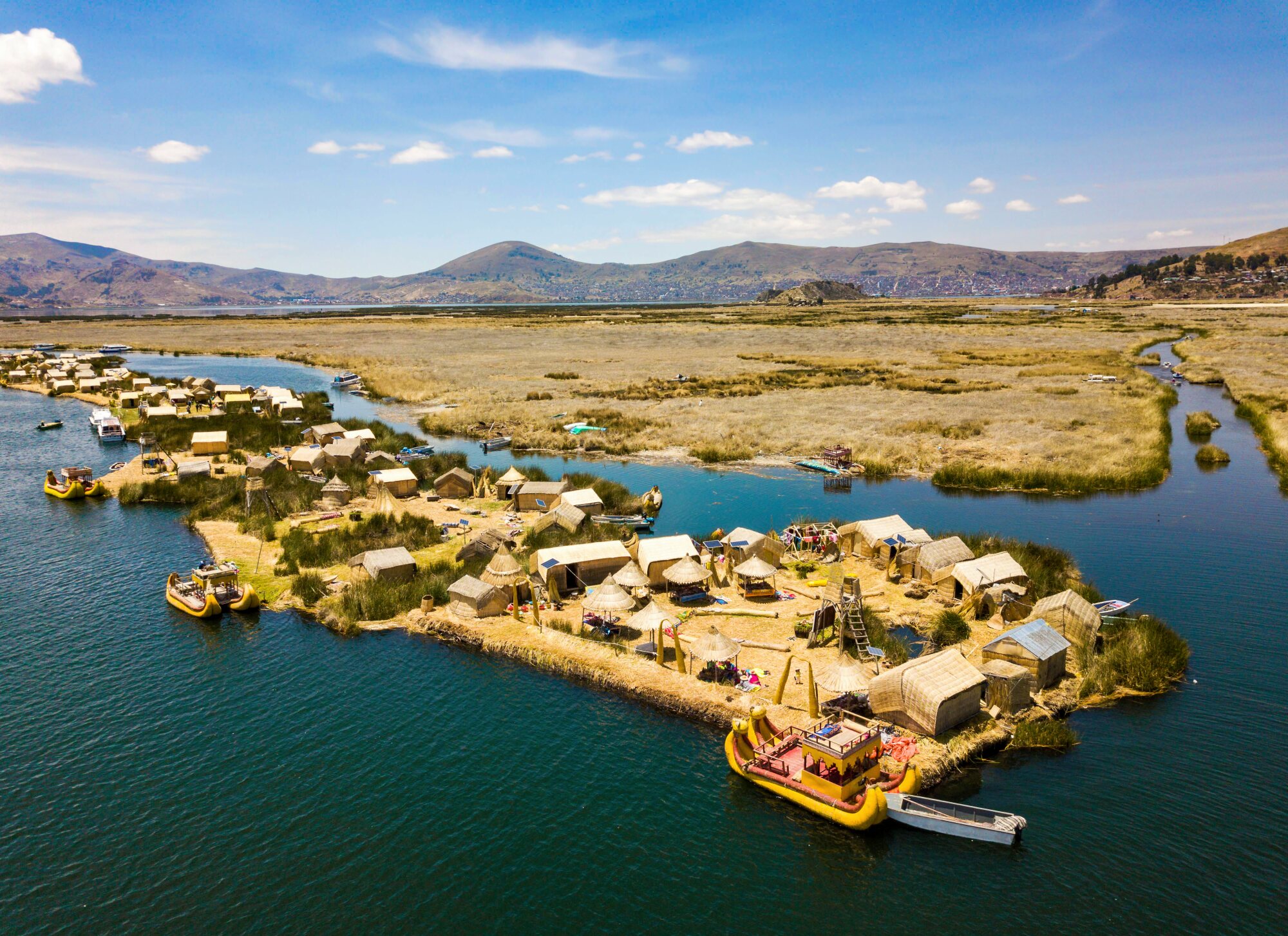
On the Peruvian side, Puno stands as the principal city on Lake Titicaca. Its harbour opens the way to the famous Uros floating islands, built and continually renewed with layers of totora reeds. Farther across the water, Taquile is celebrated for its textile traditions and strong community identity.
Puno also holds a special fascination for railway and maritime enthusiasts. The city grew as an important link between the railway and the lake steamers that once carried passengers and freight between Peru and Bolivia.
Among the reminders of that era is the historic SS Ollanta. Built in sections overseas, transported to the altiplano and assembled beside the lake, she belonged to a fleet that connected the Peruvian railhead at Puno with Bolivian ports such as Guaqui. Her story evokes a remarkable period when trains and ships formed a single transport network across some of South America’s most difficult terrain.
For Rail South America, this heritage matters. It reminds us that rail travel is never only about getting from one place to another. Railways reveal how regions were connected, how towns developed and how travellers first learned to cross immense landscapes in comfort.
From Puno, the journey continues in fitting style aboard the PeruRail Titicaca train, travelling across the Peruvian highlands to Cusco.
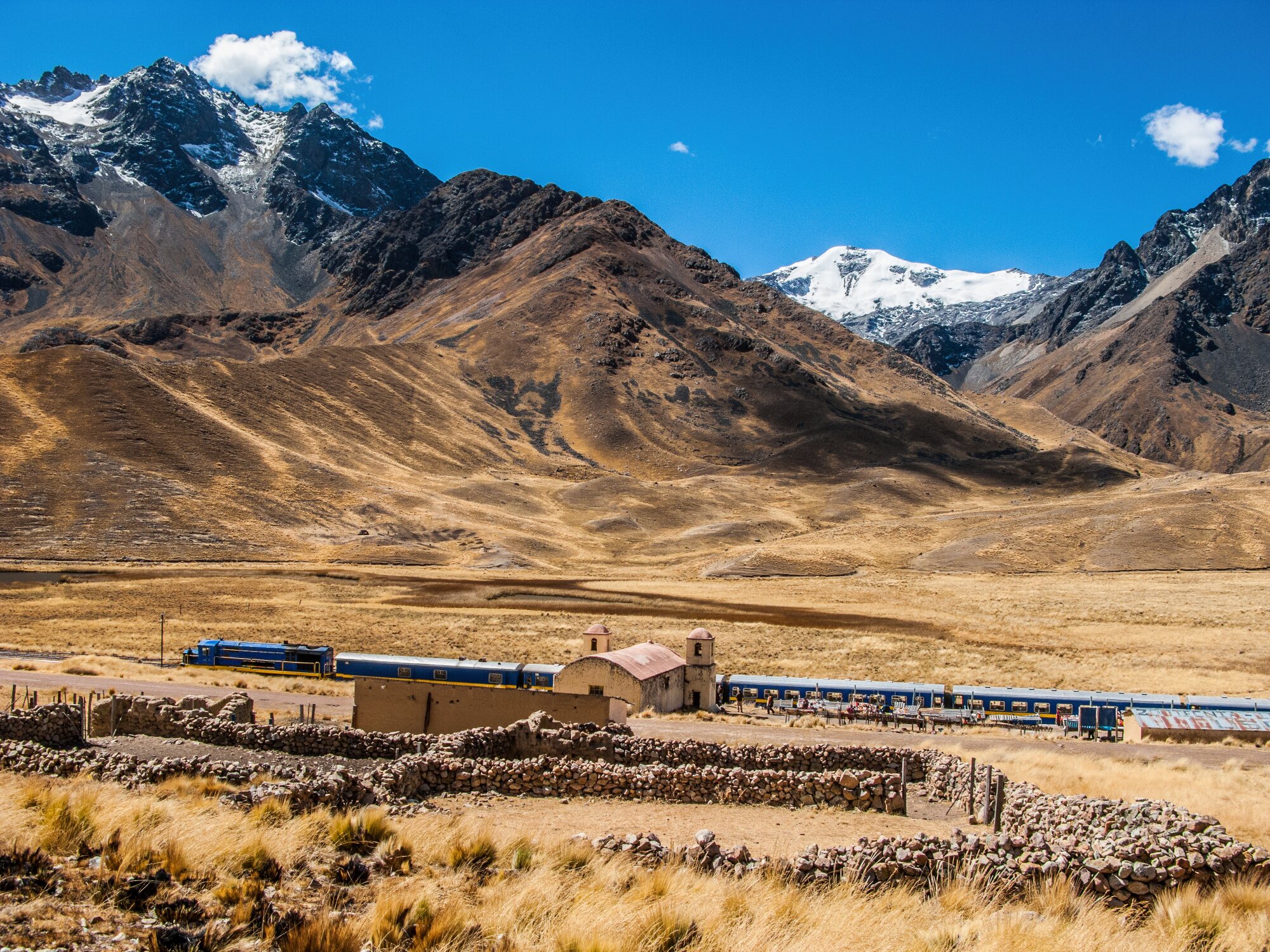
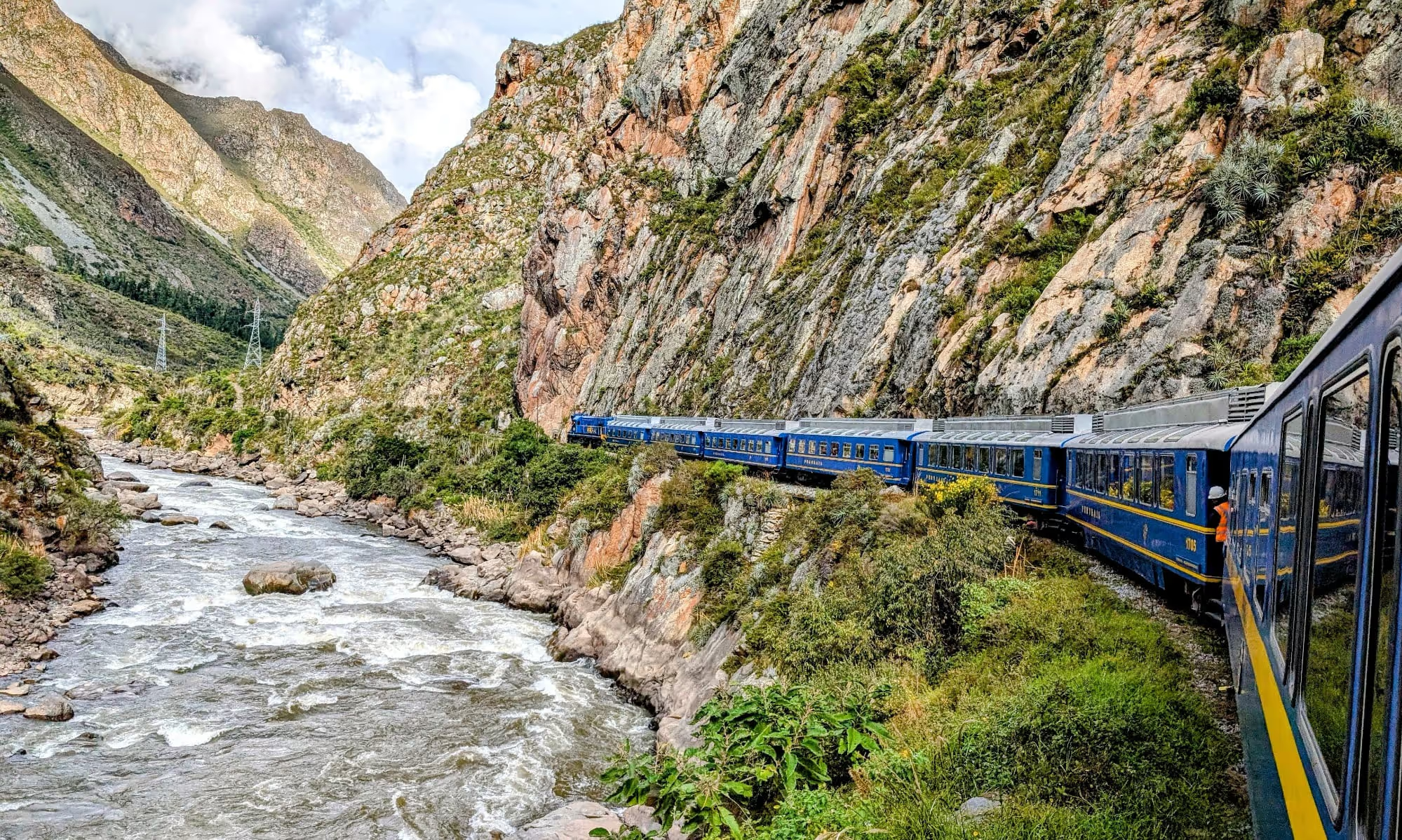
This is a full-day experience designed for travellers who understand that the journey itself is part of the destination. Beyond the broad windows, the altiplano unfolds in long cinematic scenes: grazing alpacas and vicuñas, isolated villages, rivers, golden grasslands and mountains etched against the sky.
The train reaches La Raya, the highest point of the route, at approximately 4,335 metres (14,222 feet). Here, between the regions of Puno and Cusco, the air is crisp and the mountains feel close enough to touch.
On board, classic interiors create the atmosphere of an earlier age of travel. The observation bar car—with its large windows and open-air balcony—offers a splendid place to watch the landscape pass. A three-course lunch inspired by Peruvian flavours, afternoon tea, attentive service and live music turn the crossing into an elegant celebration of the Andes.
There are faster ways to travel between Puno and Cusco. Few are as rewarding.
Lake Titicaca deserves more than a hurried visit. Allow time for both shores if your itinerary permits. The contrast between Bolivia and Peru enriches the journey and gives greater meaning to the history, traditions and landscapes encountered along the way.
A rewarding Lake Titicaca itinerary might include:
This route also creates a natural progression through the Andes. Rather than flying over the landscape, you move gradually from city to high plateau, from road to boat, and finally from lake to railway. Each stage adds another layer to the story.
At more than 3,800 metres above sea level, Lake Titicaca is considerably higher than many travellers expect. Give your body time to acclimatise, walk slowly and avoid strenuous activity on your first days at altitude. Drink plenty of water, eat lightly and limit alcohol. If you have a heart or respiratory condition—or concerns about altitude sickness—seek medical advice before travelling.
The intense high-altitude sun can make daytime feel warm, while wind, shade and evening temperatures may be surprisingly cold. Bring warm layers, sun protection, sunglasses and a hat. A light waterproof jacket is useful during the wetter season.
Ask before photographing people, follow the guidance of local hosts and purchase handicrafts directly from community artisans where possible. Tourism is most rewarding when it supports the people who keep the region’s traditions alive.
Weather, road conditions and local operations can affect travel at high altitude. A flexible outlook is part of the experience. Often, the unplanned moments—a ferry crossing, a village market or a sudden change of light over the water—become the most memorable.
Lake Titicaca is grand in scale but intimate in memory. You may remember the silence above Isla del Sol, the colour of the water beneath the afternoon sun, the quiet dignity of an ancient terrace or the rhythm of the PeruRail Titicaca train crossing the altiplano.
Long after the journey, the lake remains: a vast blue presence at the sacred heart of the Andes.
Lake Titicaca and the PeruRail Titicaca train are highlights of Rail South America’s 21-day Buenos Aires to Lima: An Andean Expedition.
Travelling through Argentina, Bolivia and Peru, the journey brings together Buenos Aires, the vineyards and painted valleys of northwest Argentina, the legendary Train to the Clouds, the Uyuni Salt Flats, La Paz, Lake Titicaca, Cusco, Machu Picchu and Lima. It is designed for travellers who value thoughtful organisation, comfortable travel and the pleasure of discovering South America at a human pace.
2027 departures:
Explore the complete Buenos Aires to Lima tour and reserve your place.
Lake Titicaca lies on the border between Peru and Bolivia in the South American Andes. Puno is the main gateway on the Peruvian side, while Copacabana is the best-known lakeside town in Bolivia.
The surface of Lake Titicaca is approximately 3,810 metres (12,500 feet) above sea level. Travellers should allow time to acclimatise and take physical activity slowly.
For travellers who value scenery and the experience of the journey, the full-day PeruRail Titicaca train is a memorable choice. It crosses the altiplano via La Raya and includes panoramic viewing areas, onboard dining and live entertainment.
Yes. The Peruvian side offers Puno, the Uros floating islands, Taquile and excellent rail connections, while the Bolivian side offers Copacabana, Isla del Sol and superb views toward the Cordillera Real. Experiencing both gives a far richer understanding of the lake.


.svg)
