


For anyone who loves railway travel, Patagonia presents an intriguing question:
Can you actually travel through Patagonia by train?
The short answer is: partly — but not entirely.
Patagonia has some remarkable railways, including historic steam trains, a genuine long-distance passenger service and the world's southernmost railway. What it does not have is a continuous passenger railway linking the great destinations of southern Chile and Argentina.
And in many ways, that is part of the fascination.
To travel properly through Patagonia, railways have to be combined with remote roads, ferries, mountain crossings, flights and, in the far south, expedition ships.
The result is not a conventional rail tour. It is something far more interesting: a journey in which the changing forms of transportation help tell the story of the landscape itself.
A glance at a map quickly provides part of the answer.
Patagonia is enormous. Mountains, ice fields, fjords, lakes and sparsely populated steppe separate settlements by great distances.
On the Chilean side, the Andes often fall directly into deep fjords. South of the Lake District, even the famous Carretera Austral cannot continue entirely by road: ferries are necessary where the geography makes road construction impractical.
In Argentina, many historic Patagonian railways were built from the Atlantic coast westward toward the interior rather than as one north-to-south system.
The result is a collection of fascinating railway lines rather than a continuous Patagonia railway.
That distinction is important for travelers.
Trying to see Patagonia entirely by train would mean missing many of its greatest landscapes. The better approach is to use the railway where the railway itself adds something to the journey.
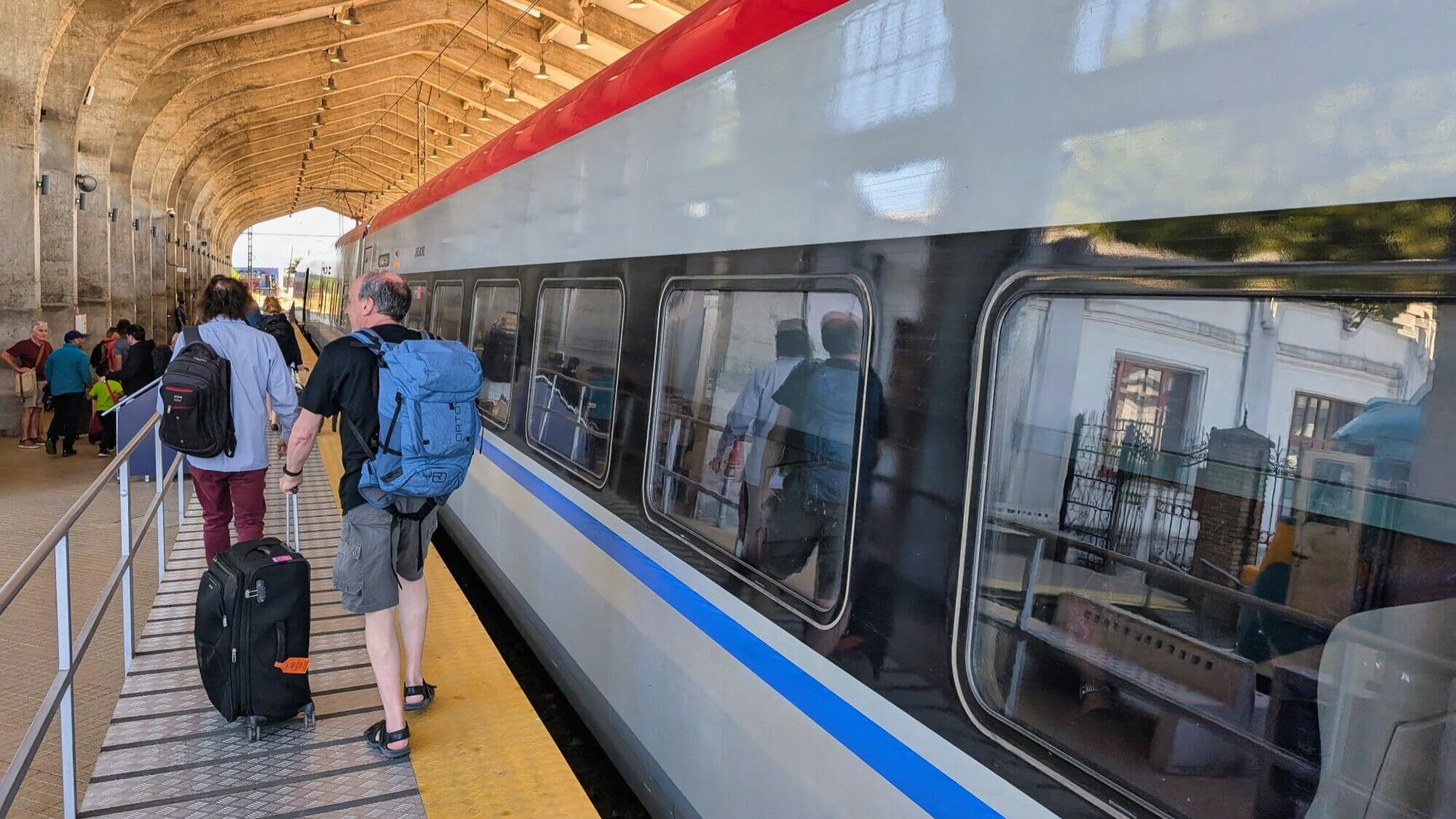
A Patagonia rail journey can begin well before reaching Patagonia itself.
Chile still has passenger trains running south from Santiago through the country's Central Valley. Modern services connect the capital with cities including Talca and Chillán, giving travelers an opportunity to begin moving south at ground level rather than simply flying over the country. Chile's EFE currently operates modern intercity equipment on these routes.
The landscape gradually changes as Santiago is left behind: urban development gives way to vineyards, agricultural land and smaller towns, with the Andes remaining a constant presence to the east.
For travelers interested in railways, however, Talca offers something considerably more unusual.
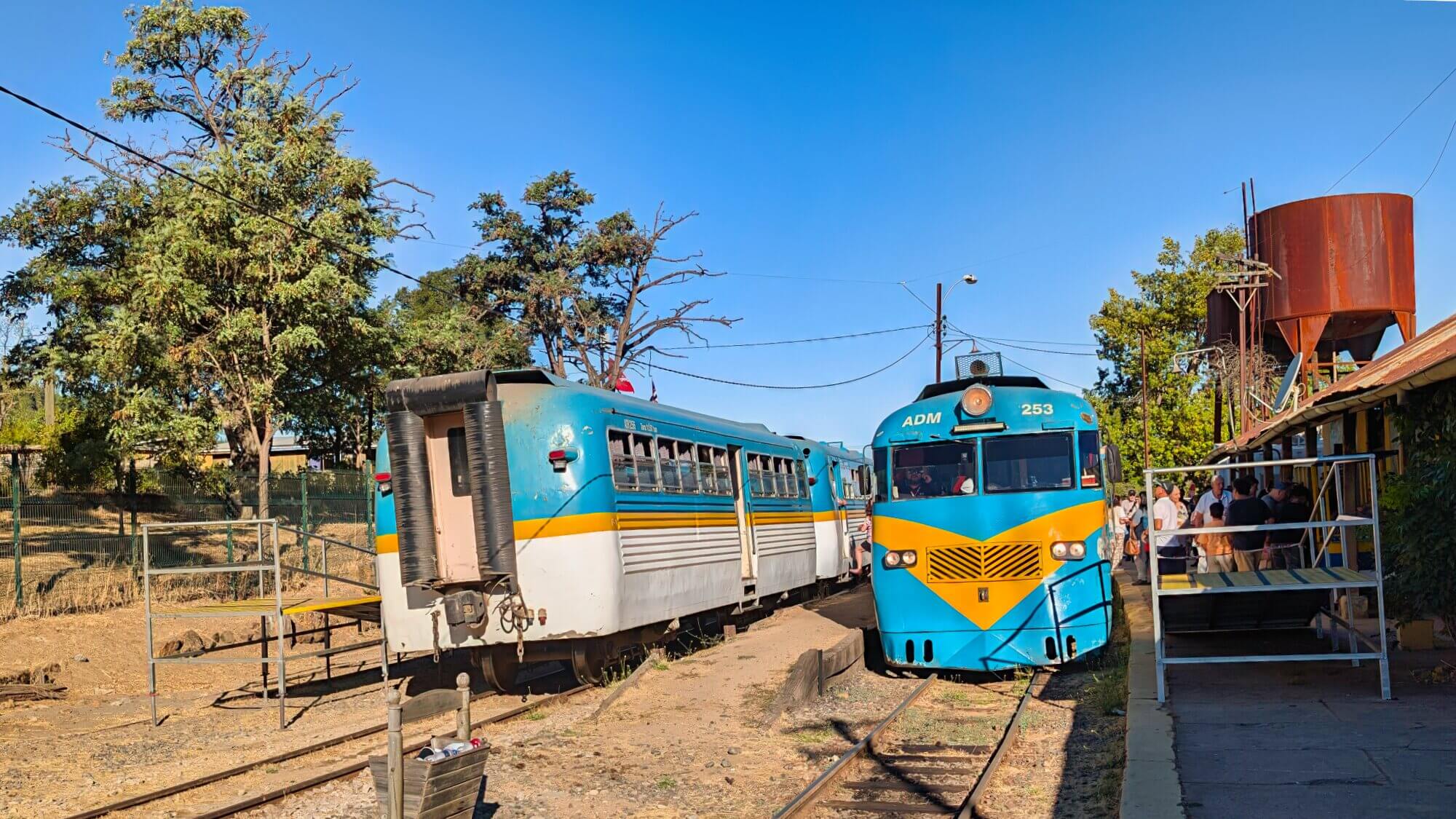
From Talca, the Ramal Talca–Constitución runs westward toward the Pacific coast.
This is not one of the world's great luxury trains. That is precisely why it is so interesting.
The railway has survived as a working link for communities along the Maule River and represents a form of local railway travel that has disappeared from much of South America.
EFE has introduced new bidirectional railcars, improving accessibility and comfort while helping secure the future of this remarkable rural railway.
The journey passes farmland, small settlements and river landscapes far removed from the more familiar tourist images of Chile.
For a traveler heading toward Patagonia, it also provides an excellent reminder that railways in South America are not only tourist attractions. Some continue to perform the practical task for which railways were originally built: connecting communities.
Farther south, the geography begins to take control.
Around Puerto Varas and Lake Llanquihue, volcanoes, forests and lakes announce the transition toward northern Patagonia.
Beyond this point, continuing south requires a very different approach.
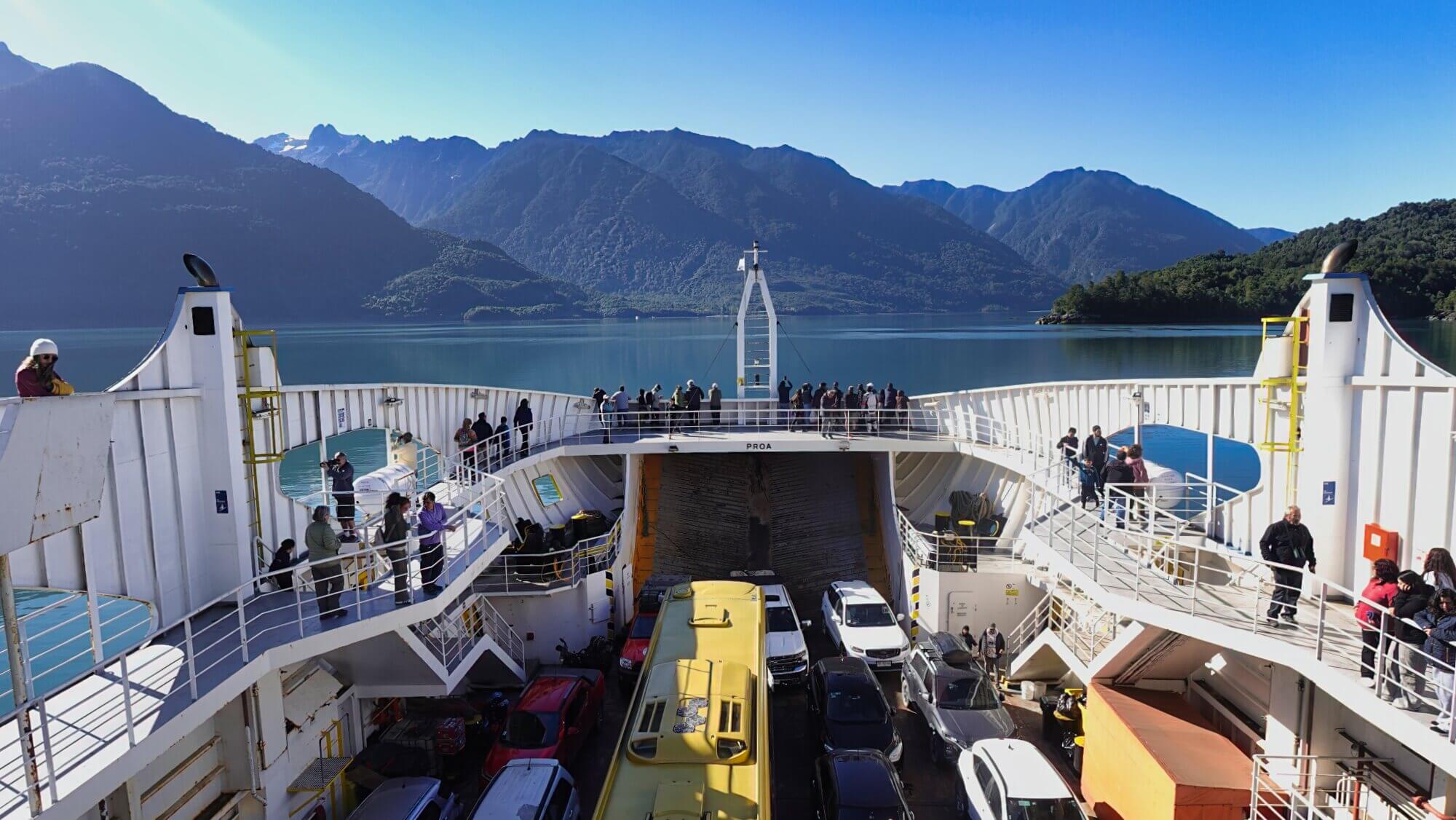
The Carretera Austral passes through a landscape so fragmented by mountains and fjords that several sections rely on ferries. Chaitén, Puyuhuapi and the remote valleys of Chilean Patagonia are reached by a combination of road and water rather than rail.
This is not a compromise.
The ferries, gravel roads and isolated settlements are part of the experience of traveling through Patagonia. They reveal the scale of the region in a way that flying from one famous destination to another simply cannot.
And after crossing the Andes into Argentina, railway travel returns in spectacular fashion.
Few trains are more closely associated with Patagonia than La Trochita, the Old Patagonian Express.
The little 750-mm-gauge railway once formed part of a much larger network across Argentine Patagonia. Today, surviving sections continue to operate as heritage railways.
From Esquel, the train travels approximately 19 kilometres to Nahuel Pan. The railway's official information describes a journey of around three hours, with the historic train negotiating 49 curves before reaching the Mapuche-Tehuelche community at Nahuel Pan.
The locomotives and carriages belong to another age.
Steam drifts across the dry Patagonian landscape as the train moves slowly away from Esquel, mountains visible beyond the open steppe.
The railway currently continues to operate regular departures from Esquel, with additional services during periods of higher demand.
For railway enthusiasts, La Trochita is not simply transportation. It is one of Patagonia's great pieces of living industrial heritage.
It also illustrates something fundamental about rail travel here: the train itself is the destination.

There is another railway that deserves to be mentioned in any serious discussion of Patagonia by train.
Tren Patagónico crosses Argentina's Río Negro Province between Viedma, near the Atlantic coast, and San Carlos de Bariloche in the Andes.
Unlike most of Patagonia's tourist railways, this is still a genuine long-distance passenger train.
The current service leaves Viedma on Fridays and reaches Bariloche the following day, with the return journey departing Bariloche on Sundays. The train crosses the enormous Patagonian steppe before eventually approaching the Andes.
It is one of the few places where travelers can still experience Patagonia from a long-distance railway carriage.
The route does not fit naturally into every Patagonia itinerary, and it is not part of our current Patagonian Rail & Wilderness journey. But for dedicated railway travelers with sufficient time, it remains one of South America's most intriguing surviving passenger trains.
.jpg)
Bariloche is surrounded by forests, mountain lakes and Andean peaks, but continuing from here toward El Calafate, Perito Moreno Glacier and Torres del Paine reveals the limitations of Patagonia's railway network.
There is no useful passenger railway connecting these major destinations.
This is where road and air transportation become essential.
That may initially disappoint someone imagining a journey through Patagonia entirely by train. In practice, however, the change of transportation makes sense.
Patagonia is not a landscape that developed around a continuous railway corridor. Its great attractions are separated by enormous distances and formidable natural barriers.
The objective should therefore not be to spend as many hours as possible on trains.
It should be to experience the railways that are worth traveling on, while using the most appropriate transportation to connect them.
At the southern end of Patagonia, railway travel appears once again.
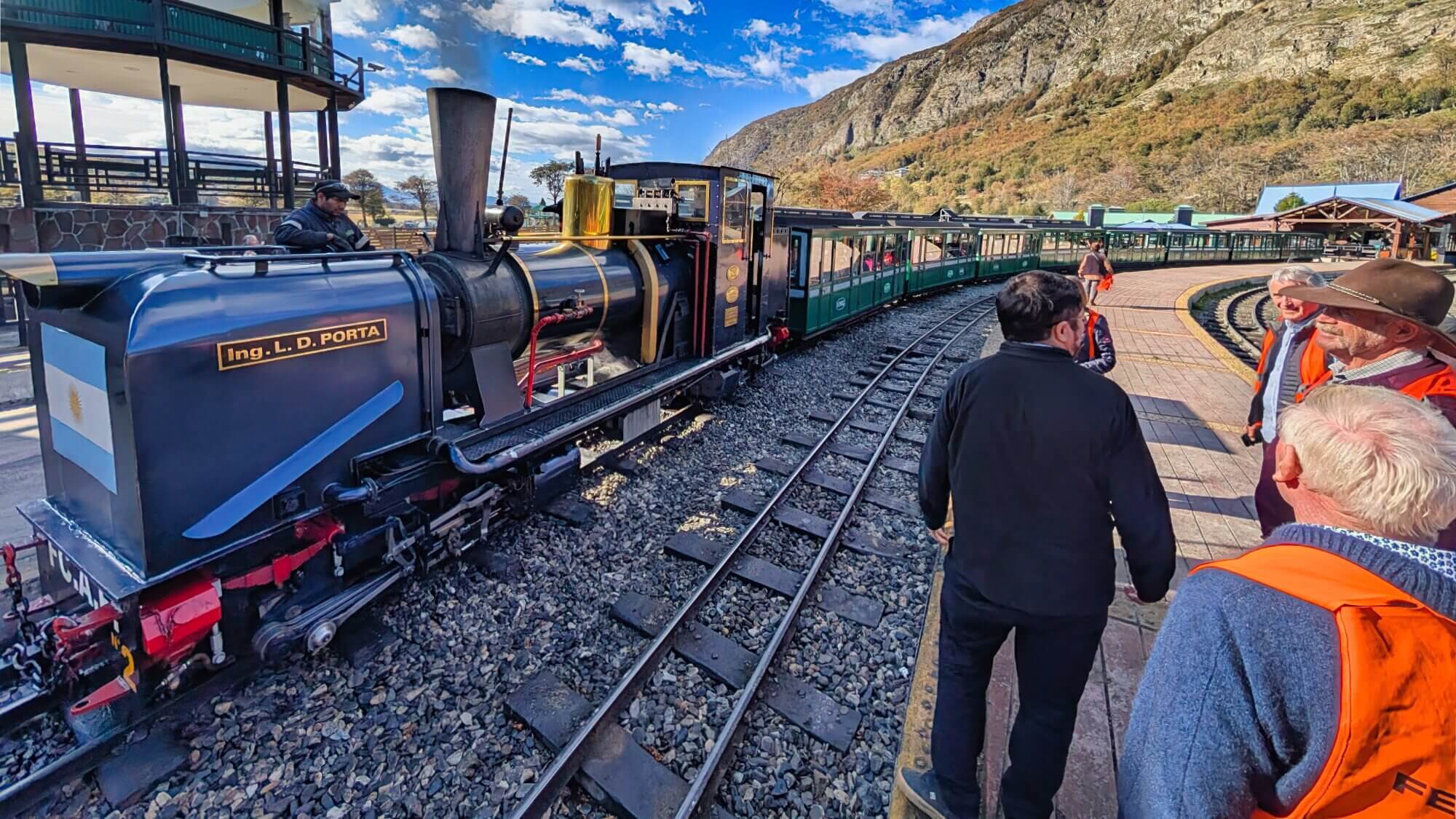
Just outside Ushuaia, the Tren del Fin del Mundo — the End of the World Train — follows the final kilometres of the route once used by Ushuaia's prison railway.
The railway was revived in 1994 after roughly four decades out of service. Today it travels through the Pipo River valley toward Tierra del Fuego National Park, following seven kilometres of the former prison railway.
The setting could hardly be more dramatic.
Forest, peat bogs, mountains and the southern Andes surround a railway operating only a short distance from the Beagle Channel.
It is a very different experience from La Trochita. Yet together the two railways form fascinating bookends to railway travel in Patagonia: one crossing the open landscapes around Esquel, the other disappearing into sub-Antarctic forest at the southern edge of the continent.
Yes — provided you do not expect to travel only by train.
A well-designed Patagonia rail journey can incorporate several remarkable railway experiences:
But between those railways lie some of Patagonia's greatest experiences: the Carretera Austral, Andean border crossings, Perito Moreno Glacier, Torres del Paine, the Strait of Magellan and the channels of Tierra del Fuego.
There are no railway tracks connecting all of them.
And there do not need to be.
This is perhaps the most important lesson when planning travel through Patagonia.
In many parts of the world, transportation is simply a means of reaching a destination.
In Patagonia, the transportation frequently becomes part of the destination.
A historic train crossing the steppe tells one story.
A ferry disappearing between forested mountains tells another.
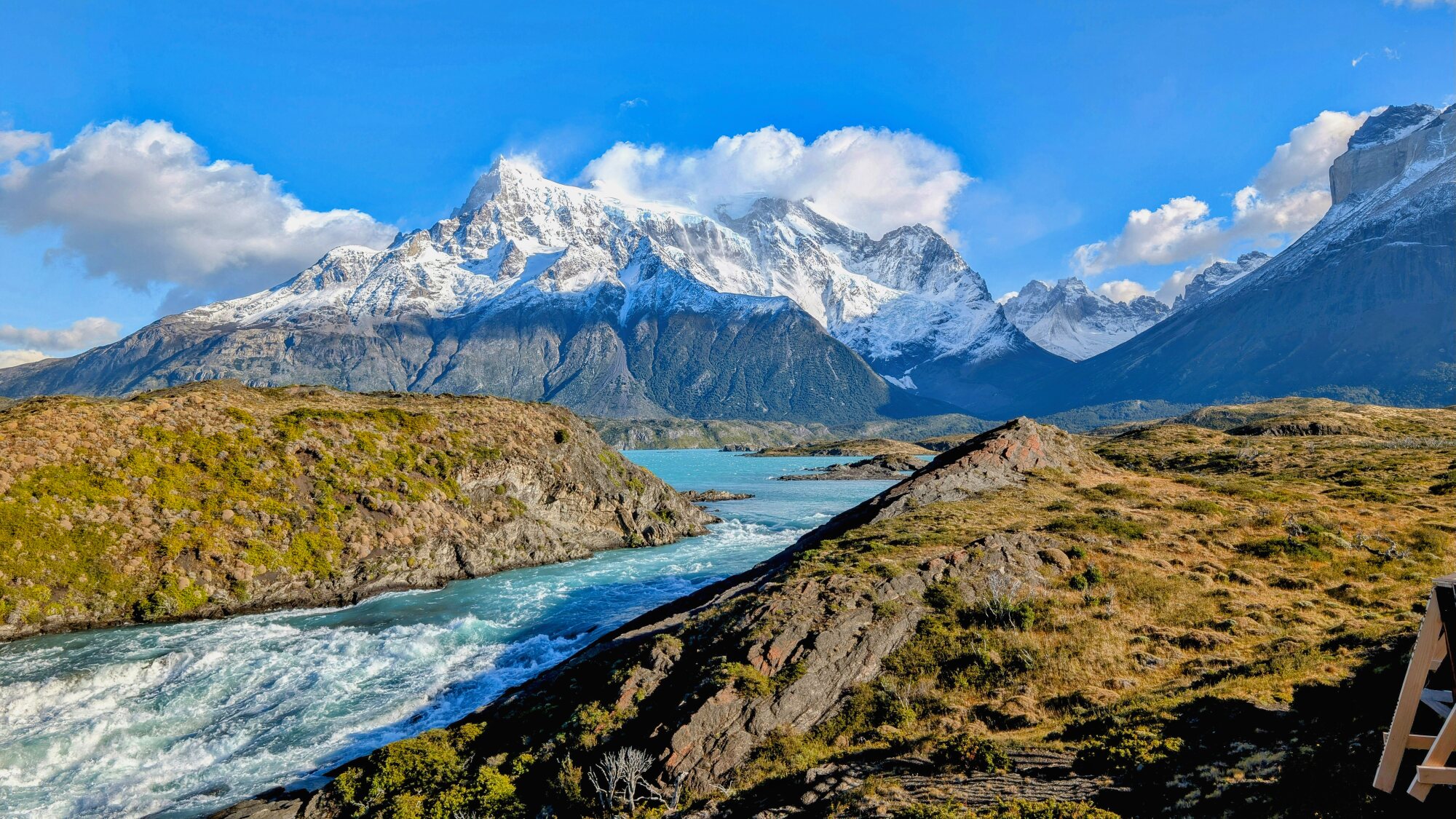
A remote road beside a turquoise river reveals yet another side of Patagonia.
Even crossing the Strait of Magellan or the Beagle Channel carries a geographical significance that is difficult to appreciate from an aircraft window.
The best journeys therefore combine these different forms of transportation rather than forcing Patagonia into a conventional rail itinerary.
Our Patagonian Rail & Wilderness journey was designed around exactly this principle.
We begin in Santiago and travel south through Chile, incorporating worthwhile railway journeys before entering the landscapes of northern Patagonia.
From there, the route follows the Carretera Austral through fjords and forests, crosses the Andes into Argentina and includes the legendary La Trochita railway.
The journey continues through Bariloche to Perito Moreno Glacier and then across southern Patagonia to Torres del Paine and Punta Arenas on the Strait of Magellan.
Travelers who want to continue to Tierra del Fuego can travel via Puerto Williams and the Beagle Channel to Ushuaia — including the End of the World Train — or continue by expedition ship through the fjords and channels between Punta Arenas and Ushuaia.
It is not an attempt to pretend that Patagonia can be crossed entirely by rail.
Instead, it uses trains where railway travel is historically, scenically or culturally worthwhile — and uses roads, ferries, flights and ships where Patagonia's geography demands them.
For travelers who believe that how you reach a place can be just as memorable as the place itself, that may be the most rewarding way to experience Patagonia.


.svg)
