Most travelers arriving in Panama know about the Panama Canal.
Far fewer realize that another extraordinary transportation route crossed the Isthmus almost six decades before the first ship passed through the Canal.
It was a railway.
The Panama Canal Railway, originally known simply as the Panama Railroad, linked the Atlantic and Pacific sides of Panama in 1855. At a time when there was no canal, no highway across the country and certainly no air travel, the railway provided a remarkably fast way of crossing from one ocean to the other.
Today, trains still travel between the Panama City and Colón sides of the Isthmus. The railway follows the Panama Canal for much of its route, passing tropical rainforest, waterways and Gatún Lake.
For anyone interested in railways, engineering or transportation history, it is one of Panama's most fascinating journeys.
It is easy to assume that Panama's railway was constructed because of the Canal.
In fact, the opposite is true.
The railway came first.
During the middle of the 19th century, crossing between the Atlantic and Pacific Oceans presented an enormous problem. Ships traveling between the east and west coasts of North America had to make the long voyage around Cape Horn at the southern end of South America.
The discovery of gold in California in 1848 suddenly made finding a quicker route much more urgent.
Thousands of travelers headed toward California. Crossing the relatively narrow Isthmus of Panama offered an attractive shortcut, but the interior consisted of rivers, swamps and dense tropical forest.
A railway promised to change everything.
Construction began in 1850 under exceptionally difficult conditions. Five years later, the rails finally met.
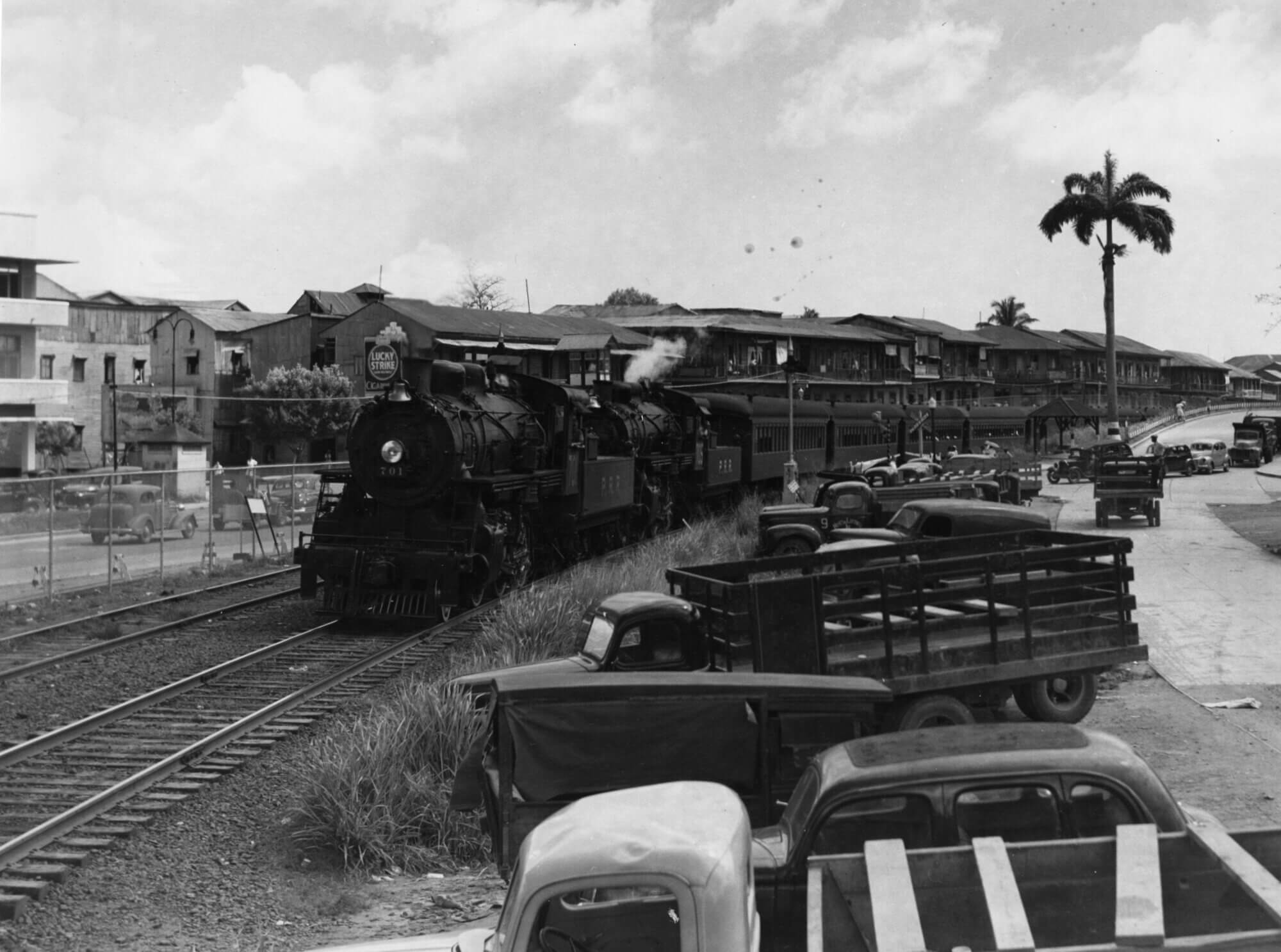
On January 28, 1855, a train traveled all the way from the Atlantic side of Panama to the Pacific for the first time. The completed railway was approximately 47 miles long.
The Panama Canal Authority describes it as the first railway transportation link between the Pacific and Atlantic across Panama.
Suddenly, one of the great geographical barriers of the Americas could be crossed by train.
The timing could hardly have been better.
The California Gold Rush created enormous demand for transportation across Panama. Travelers could arrive by ship on one coast, cross the Isthmus by railway and board another vessel on the opposite coast.
What had once been an arduous overland crossing became a rail journey.
The railway was also extraordinarily profitable during its early years. Large quantities of gold moving between California and the eastern United States crossed Panama on the trains. Between 1855 and 1867, the railway company records that more than $700 million worth of gold was transported over the route.
For several decades, this relatively short railway became an important link in international transportation.
But its greatest contribution was still to come.
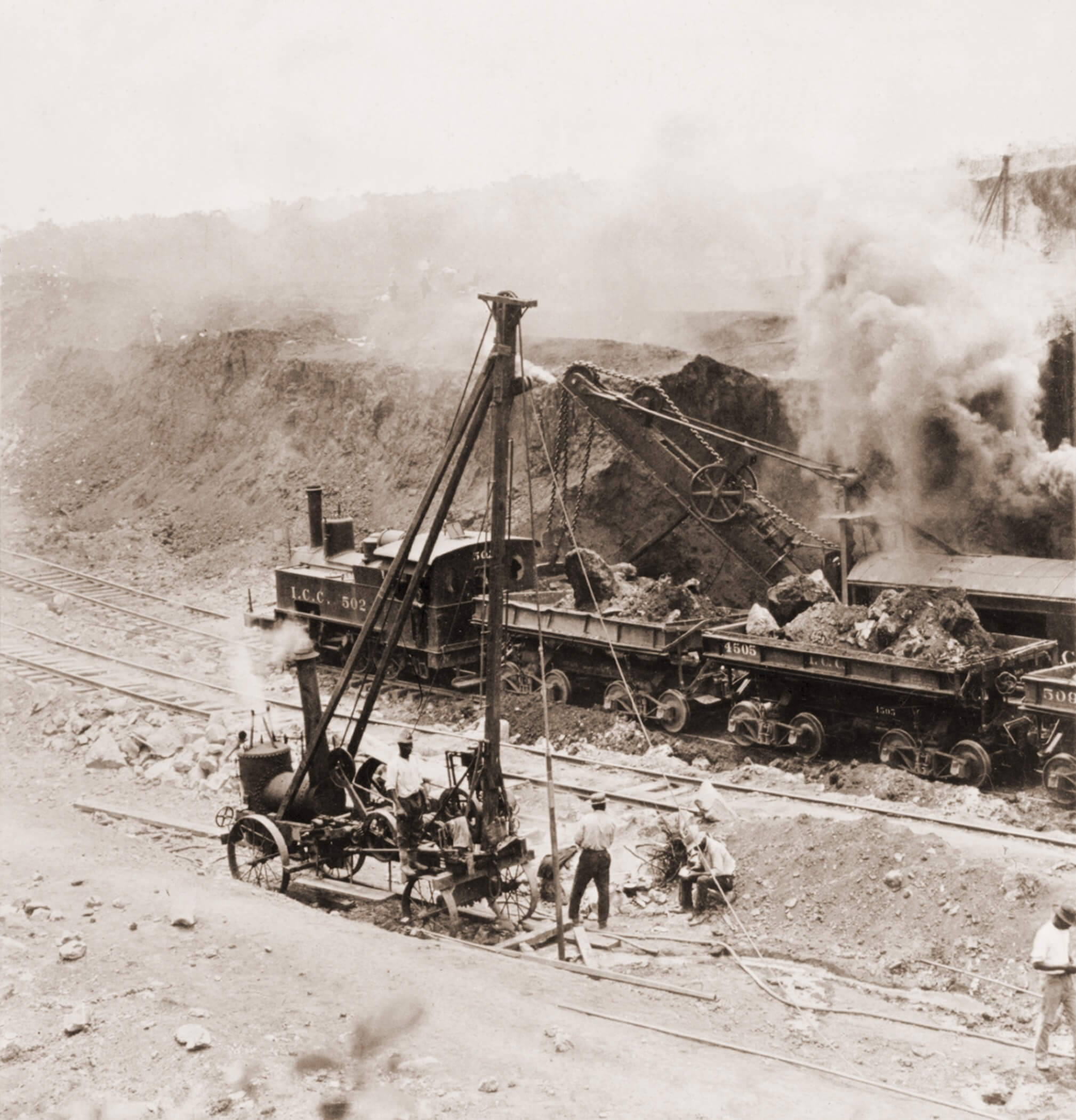
When work on the Panama Canal entered its American construction phase in 1904, the existing railway became indispensable.
Building the Canal required moving staggering quantities of earth, equipment, materials and workers.
Railways were central to that operation.
Tracks had to reach excavation areas, trains carried spoil away from the enormous cuts, and locomotives moved equipment and supplies around the construction zone. The Canal Authority records how chief engineer John Stevens reorganized railway operations and created an elaborate system for removing excavated rock and soil by train.
At the same time, the railway itself had to move.
Large sections of the original line lay in territory that would eventually disappear beneath the waters created by the new Canal.
Beginning in 1907, much of the railway south of Gatún was relocated. Enormous embankments were constructed across low-lying terrain, and parts of the new route were built alongside what would become Gatún Lake. The relocation was completed in 1912.
Two years later, on August 15, 1914, the Panama Canal officially opened.
The railway that had once provided the shortcut between the oceans had helped make an even more ambitious shortcut possible.
The modern railway still connects the Pacific and Atlantic sides of Panama.
Its route extends for approximately 76 kilometres, or 47½ miles, between the Panama City area and Colón.
This is not simply a historic tourist railway.
The line remains an important freight corridor, moving containers between Panama's major ports. Passenger trains operate more selectively, including excursion and tourism services, rather than functioning as a frequent conventional intercity railway.
That working character is part of what makes the journey interesting.
The railway has not survived merely as a museum exhibit. More than 170 years after the first train crossed Panama, trains still use the trans-isthmian route.
The scenery is very different from the dramatic mountain railways found elsewhere in Latin America.
Here the attraction is the relationship between railway, tropical landscape and water.
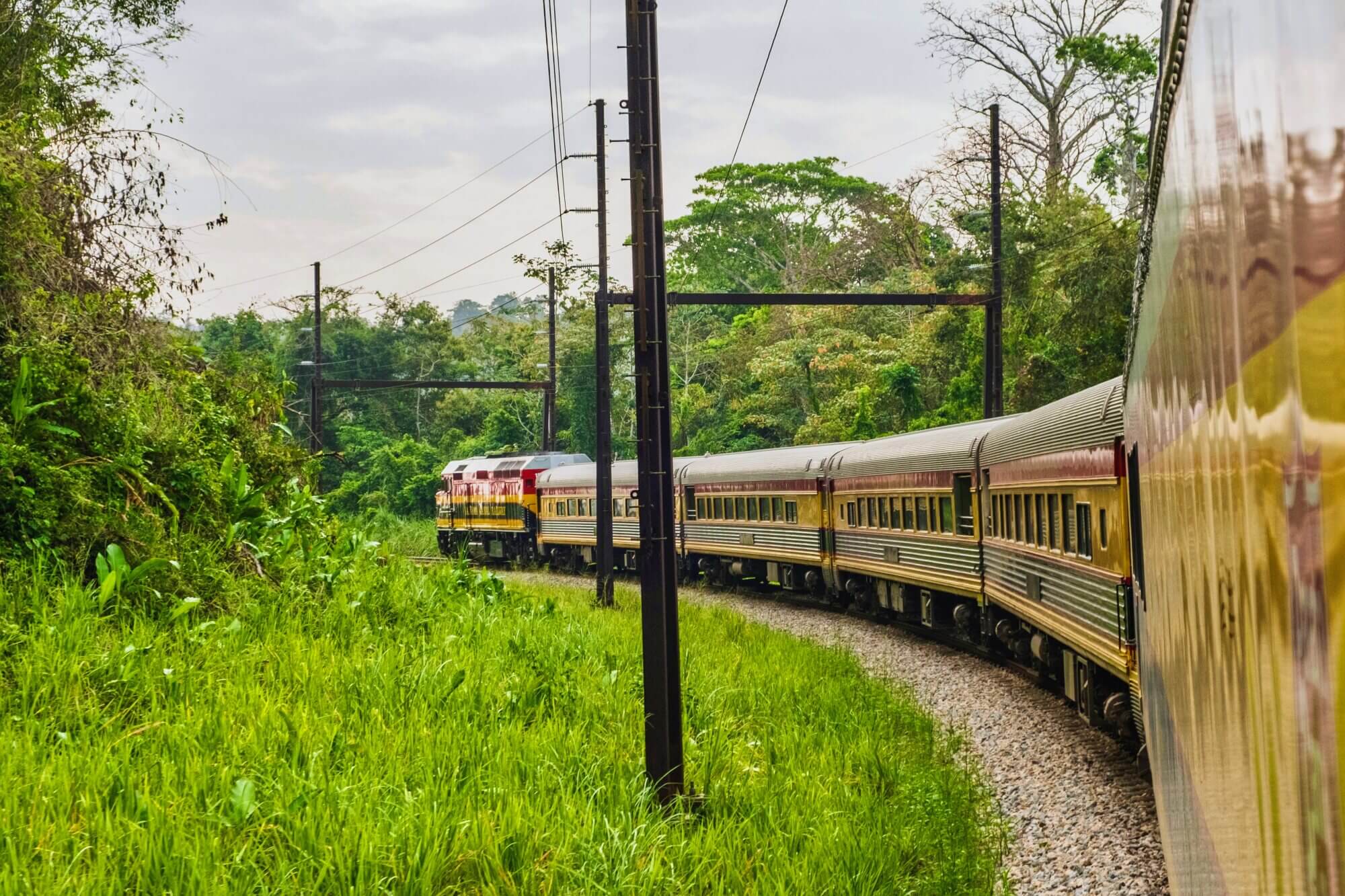
The line follows sections of the Panama Canal and passes through dense rainforest before running beside Gatún Lake, the enormous artificial lake created during construction of the Canal.
At various points, railway and waterway seem almost to share the same corridor.
The Panama Canal Railway describes the passenger journey as passing alongside the Canal, through rainforest, near the historic Gaillard Cut and over narrow causeways surrounded by Gatún Lake.
From the train, it becomes easier to understand just how extraordinary the geography of Panama is.
The distance between the Atlantic and Pacific is remarkably short, yet between them lies a complex landscape of hills, rivers, forest and lakes.
Overcoming that landscape required first a railway and later one of the world's most ambitious canals.
This is what makes the Panama Canal Railway different from an ordinary scenic train ride.
The railway tells one chapter of the story.
The Canal tells another.
From the windows of the train, passengers can see parts of a transportation corridor that has connected the world's oceans for generations. Freight trains, container terminals and enormous ships are all part of the same landscape.

The railway was once the revolutionary new technology.
Today, giant container vessels passing through the Canal may appear far more impressive.
Yet the railway came first.
Without it, constructing the Canal would have been considerably more difficult.
Seeing the two systems beside one another turns a train journey into a lesson in transportation history.
Modern Panama Canal Railway passenger equipment also contains a reminder of classic railway travel.
The railway operates refurbished passenger coaches as well as a distinctive dome car, originally built in 1938 for the Southern Pacific Railroad. Its curved glass roof allows passengers to look outward and upward across the tropical landscape.

It creates an interesting contrast.
Outside is one of the world's most important modern shipping corridors.
Inside is a style of railway carriage associated with another age of long-distance train travel.
That combination suits the railway rather well.
The Panama Railroad has always adapted to changing forms of transportation while retaining its original purpose: moving people and goods across the Isthmus.
It would be easy to regard the train simply as transportation between Panama City and Colón.
That would miss much of the point.
The importance of this journey lies in understanding why the railway is here.
It was built because geography created a problem.
It prospered because people needed to cross between oceans.
It later became essential to building the Panama Canal.
And today it continues to operate alongside the very waterway that eventually replaced much of its original role.
Few railway journeys tell such a complete story about the changing history of transportation.
On our Colombia & Panama – Rails, Rum & Coffee journey, the railway forms part of a broader exploration of the Panama Canal.
We do not see the Canal from only one viewpoint.
We experience the historic railway across the Isthmus, visit the Canal area and later undertake a partial transit by boat.
That combination is important.
From the train, you see how the railway and Canal occupy the landscape together.
From land, you can understand the scale and operation of the locks.
And from a vessel inside the Canal itself, you experience what the entire system was built to achieve.
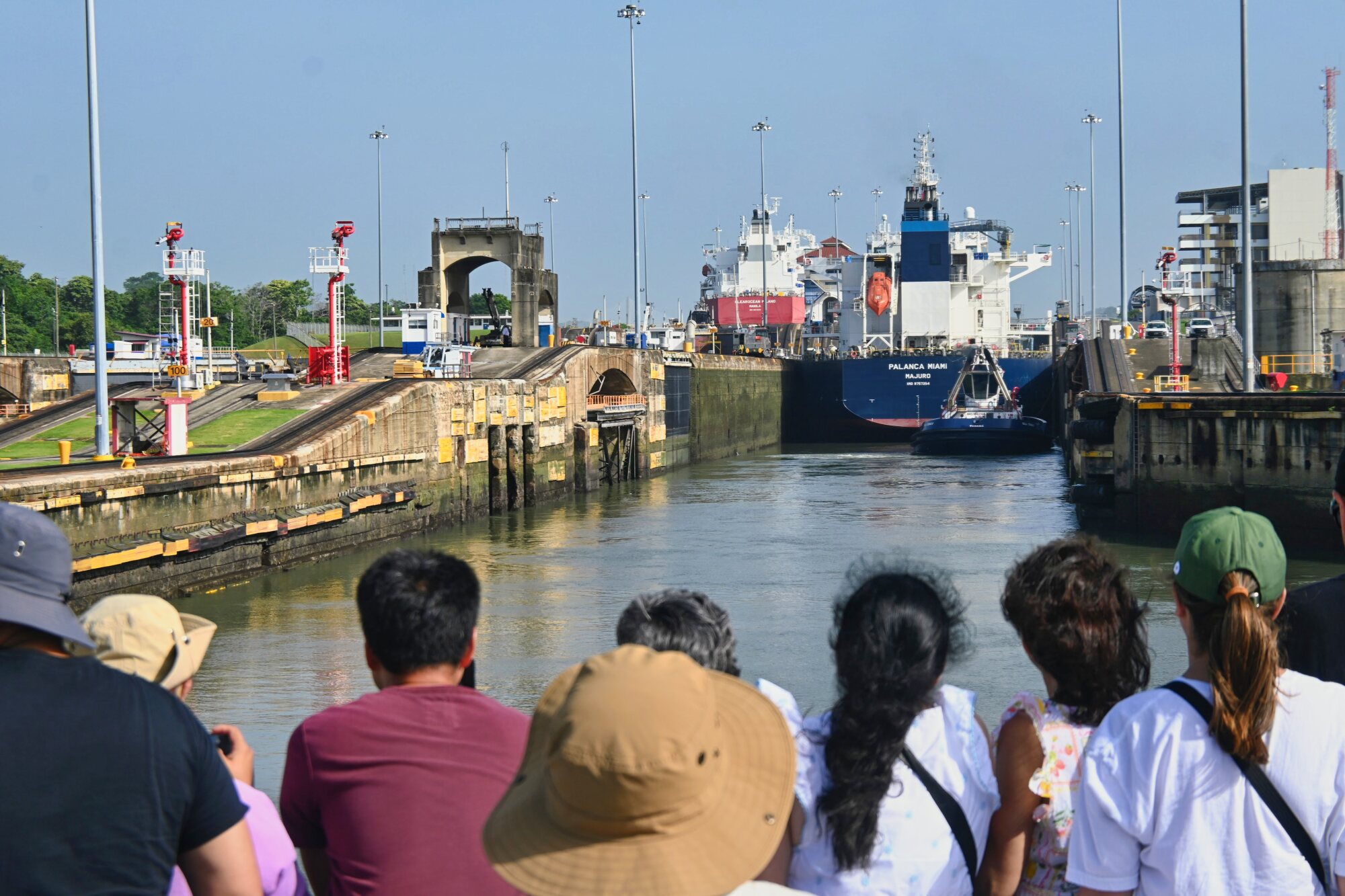
Railway history, engineering and modern global shipping suddenly become parts of the same story.
Many of the world's great historic railways survive because enthusiasts fought to preserve them.
The Panama Canal Railway is different.
It has survived because Panama continues to need it.
Its purpose has evolved from carrying Gold Rush passengers to supporting Canal construction, transporting freight and carrying today's passengers across the Isthmus.
The locomotives are different.
The Canal beside the tracks did not exist when the first trains ran.
Panama City and Colón have changed beyond recognition.
But the basic idea remains almost exactly the same as it was in 1855:
crossing Panama from one ocean to the other by rail.
More than 170 years later, that still makes the Panama Canal Railway one of the most historically significant train journeys in the Americas.